
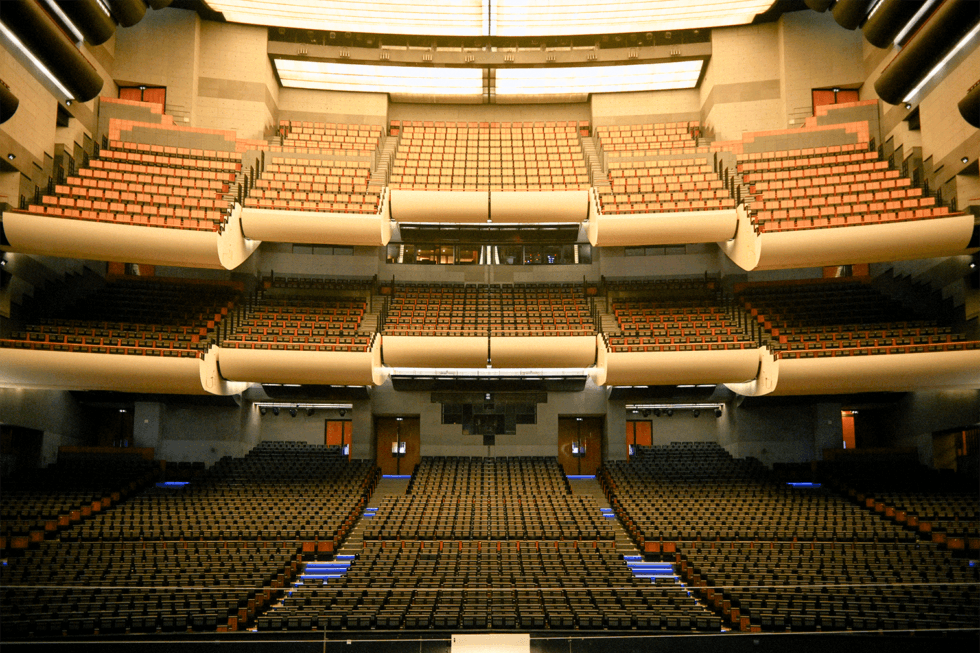
Few opera houses carry history in their address quite like Opéra Bastille. Built on the symbolic Place de la Bastille and inaugurated in 1989 for the bicentenary of the French Revolution, the venue was conceived as a different kind of opera house from the start. Rather than echoing the velvet-and-gold grandeur of the past, it was designed as a bold, modern production environment: transparent, technically ambitious and open to the city around it. Created by Uruguayan-Canadian architect Carlos Ott, the building brought a new architectural and operational vision to one of Europe’s oldest art forms. Today, that same spirit continues behind the scenes, where centuries-old traditions rely on cutting-edge audio networking to reach the audience far beyond the main hall.
When audiences enter Opéra Bastille in Paris, they experience world-class opera and ballet productions renowned far beyond France’s borders. What they don’t see is the elaborate audio ecosystem working behind the scenes: supporting the artists on stage, capturing each performance and enabling live streaming and cinema broadcast.
As production requirements continued to evolve, Opéra Bastille needed an infrastructure capable of handling an increasing number of audio workflows while maintaining the exceptional sound quality expected from one of Europe’s premier cultural institutions.
The answer was a resilient Luminex network infrastructure designed to support Lawo mixing consoles, RAVENNA and Dante audio, and the venue’s expanding live, recording, broadcast and streaming workflows.
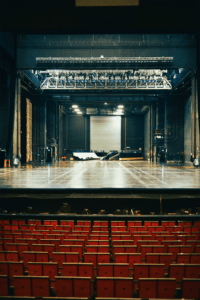
For decades, an opera house’s primary focus was the audience inside the venue, however nowadays, every performance serves a much broader purpose.
At Opéra Bastille, audio teams support stage monitoring systems, provide audio feeds for late-arriving patrons, record every performance and deliver content to the venue’s streaming platform and cinema distribution partners.
“We record every single performance and hand the audio signals over to our video department for embedding (…) and we’re doing more and more recordings, both for our streaming platform and even for live cinema broadcasts. Our new network lets us handle a huge number of streams that simply weren’t possible before,” – Romain Millot, Audio Engineer at Opéra Bastille.
The increasing demand for recordings, streaming content and live cinema broadcasts created a need for more flexibility than conventional point-to-point audio infrastructures could provide.
At the same time, the solution had to remain intuitive for operators and maintain the highest possible audio quality required for classical music productions.
To meet these challenges, Opéra Bastille built a flexible Audio-over-IP ecosystem on a resilient Luminex network foundation. The infrastructure connects performance spaces, control rooms, recording facilities and broadcast workflows, allowing audio and communication signals to move reliably throughout the venue.
Across the network, Lawo mc²56 mixing consoles, A__stage64 stageboxes and PowerCore units support the production workflow, while RAVENNA and Dante provide interoperable audio transport. Luminex GigaCore switches bring these technologies together, creating a shared infrastructure for live sound, recording, streaming and cinema distribution.
“Since setting up our Lawo consoles, we’ve been using Luminex switches to route our signals to any destination on the network,” – Bertrand Cordebart, Performance Supervisor at Opéra Bastille.
Through the Luminex network, engineers can route audio to any required destination without the limitations of conventional point-to-point systems. The shared infrastructure also provides the redundancy and scalability needed to accommodate evolving production requirements.
Opera productions present a unique combination of challenges. They require the immediacy and reliability of live sound while also supporting recording and broadcast workflows that demand studio-grade quality.According to Bart Swinnen, CEO of Luminex Network Intelligence, this makes Opéra Bastille a particularly compelling example of IP adoption in the performing arts sector:
“Lawo and Luminex are, in a sense, a perfect combination because we’re in an environment where the live and studio worlds come together.”
The Luminex network allows multiple production workflows to operate independently across the same infrastructure. The two Lawo consoles can therefore support different tasks simultaneously, while audio remains available wherever it is needed for live sound, recording, streaming or broadcast. Whether mixing for the audience inside the theater, creating recording feeds, supporting streaming productions or preparing content for cinema distribution, the platform adapts to the needs of each production.
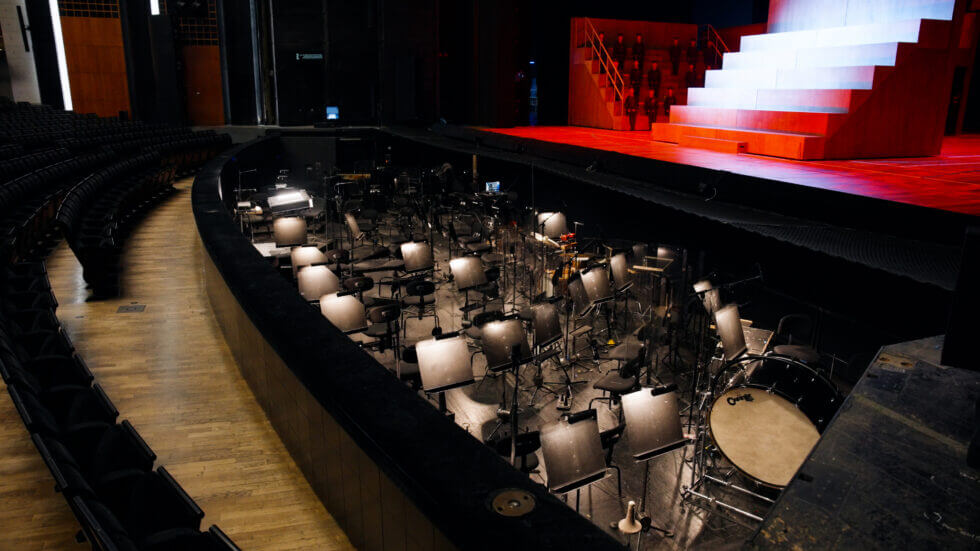
Behind every performance, multiple production and communication systems need to work together seamlessly. By carrying these services over a shared Luminex infrastructure, Opéra Bastille can extend and adapt its network without rebuilding separate systems for every new requirement.
For operators, that flexibility must remain accessible at production level. The Lawo environment allows workflows to be configured around the needs of each performance supported by the network architecture.
Combined with the flexibility of the underlying Luminex network, this allows operators to adapt workflows efficiently while maintaining consistency across a diverse range of performances. For an organization producing hundreds of events annually, those operational efficiencies quickly add up.
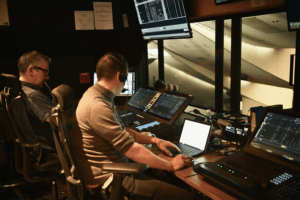
With streaming becoming an increasingly important extension of the live audience experience, Opéra Bastille sees Audio-over-IP as a foundation for future growth.
Built around Luminex GigaCore switches, the venue’s secure and self-contained network provides redundant signal paths, scalable connectivity and precise timing distribution. This gives Opéra Bastille a reliable foundation on which additional devices, protocols and production workflows can be introduced as requirements evolve.
“In my career, I’ve seen several systems in both this control room and the recording room. This latest evolutionary step feels like a serious leap.” – Olivier Danis, Audio Maintenance Manager at Opéra Bastille
According to him, the migration represents more than just a technology upgrade.
Today, the combination of Lawo’s production ecosystem and Luminex’s network infrastructure enables Opéra Bastille to seamlessly connect live sound, recording, broadcast and streaming workflows across one of Europe’s most prestigious performing arts venues.
As expectations for content delivery continue to evolve, the organization now has an infrastructure capable of supporting both today’s production workflows and tomorrow’s innovations.
4x GigaCore 10i in a RED/BLUE redundant setup and single mode 10G fiber connectivity, connecting 2x Lawo mc²56 mixing consoles, A__stage64 stageboxes and PowerCore units amongst others.
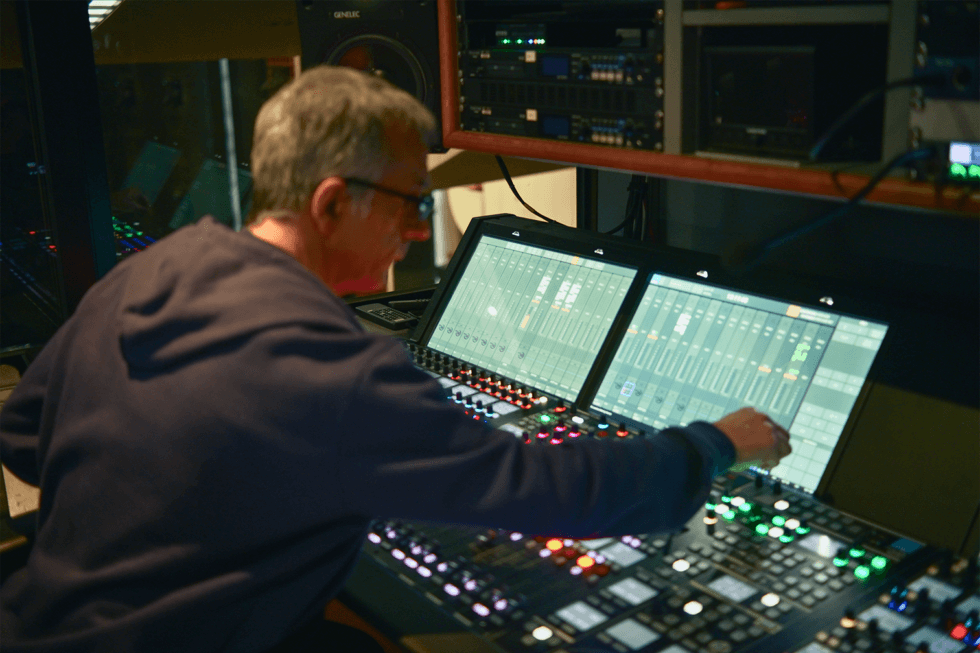
A Luminex network also provides intercom connectivity to all different disciplines throughout the entire Bastille theatre, supporting AES67 and Dante communications. Primary and secondary networks for each protocol create a redundant infrastructure designed to maintain reliable communication across the Riedel deployment.
The installation uses a star topology built around 14 GigaCore switches, with a GigaCore 30i in its center. This architecture connects over 110 devices, consisting primarily of Riedel Bolero wireless intercom equipment and Artist control panels. Beltpack chargers are also connected to the network, enabling their status to be monitored as part of the wider intercom environment.
Communication is distributed over redundant primary and secondary paths for both AES67 and Dante. A key advantage of the GigaCore platform is its integrated PTPv2 Boundary Clock functionality. Each switch participates actively in the timing architecture: it receives, regenerates, and forwards precise clock information at every network segment. This provides stable, deterministic clock distribution as the network expands. Assigning this function to the GigaCore switching platform, rather than leaving this function with the edge devices, supports responsive scalable timing distribution, timing resilience, and overall system reliability.