About OSA Stage Arts
Based primarily in Tokyo and Osaka, OSA Stage Arts provide sound system design and operation services for plays and musicals, offering a wide range of sound production services from small-scale events to arena-class venues.
Products Used
TiMax: SoundHub
Martin Audio: CDD12, LE100, ADORN A55, THS, Blackline X8, SX115, iKON iK42
Overview
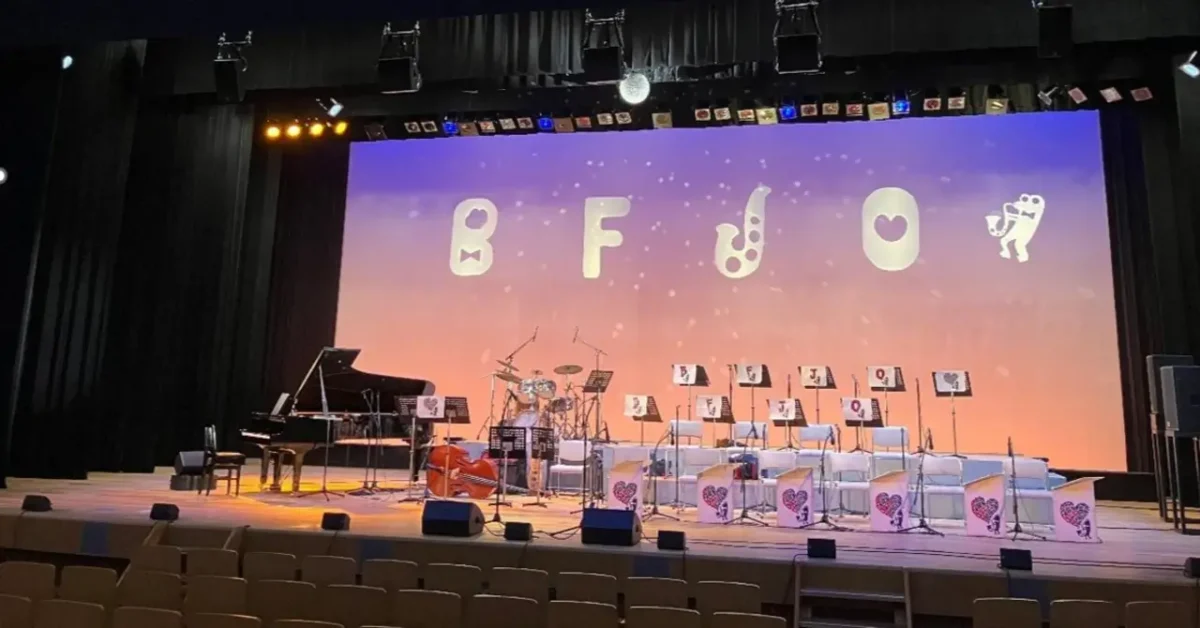
The Big Friendly Jazz Orchestra, the jazz band club of Hyogo Prefectural Takasago High School, a prestigious school that served as the model for the movie “Swing Girls,” held its annual youth charity concert on July 13, 2025, at the Takasago City Cultural Hall’s Jotonba Hall. The concert once again concluded with a sold-out audience.
For this performance, we spoke with Mr. Nagai, CEO of OSA Stage Arts, who oversaw the sound system centered around TiMax’s immersive processor, and Mr. Asahara of Soundwork Ashley, the operating company, about their experience using SoundHub and the speakers and power amplifiers they used.
Interview
Could you please explain the circumstances that led to the use of TiMax SoundHub at this event, including the nature and background of the event?
OSA Stage Arts’ Mr. Nagai :
In the past, with the cooperation of various agencies and manufacturers, we have supported the band’s wonderful performances using the latest sound equipment at this event. Personally, I can’t remember exactly, but I’ve been doing it intermittently for about 15 years, and I believe this is our fourth year of support.
Every year, I work with Mr. Asahara of Soundwork Ashley, the operator, to decide on a theme and try something new, and we began experimenting. Last year, we tried using an immersive audio processor from another company for a concert, and it was very well received, so it has become an indispensable part of the production. This time, with the cooperation of Audio Brains, who we work with on a regular basis, we tried using the TiMax SoundHub.
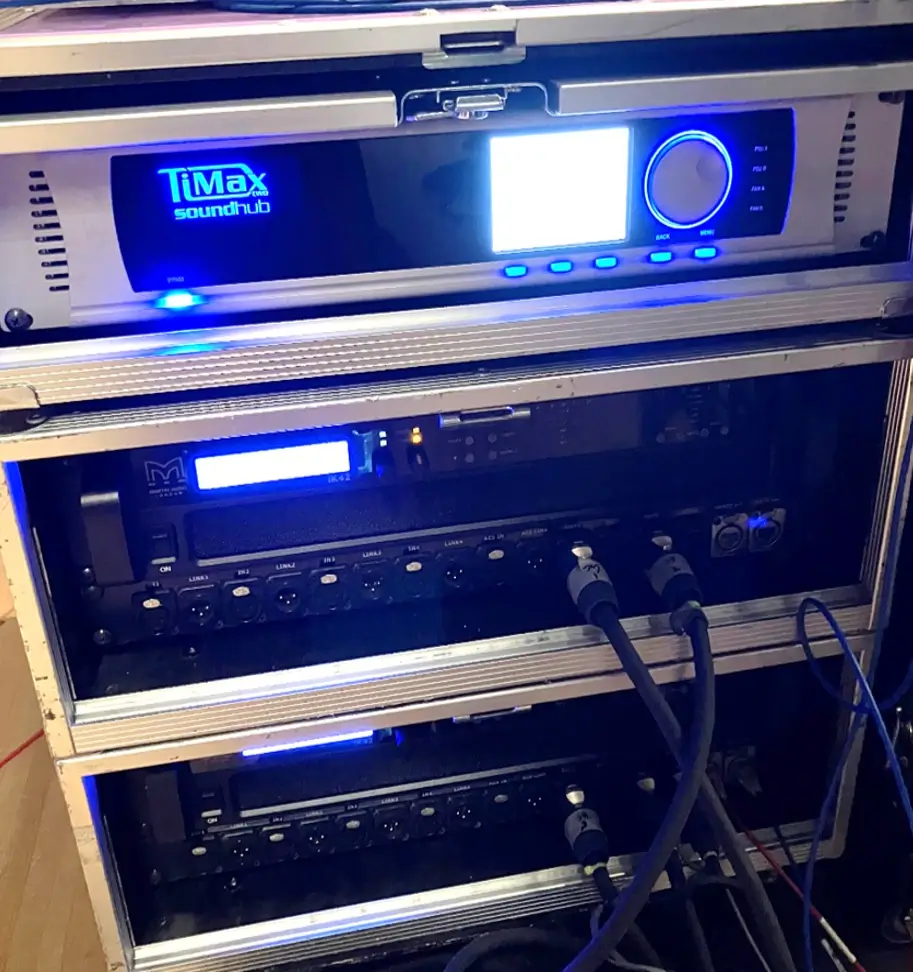
The TiMax SoundHub processes in a very unique way among immersive audio processors, and I think its characteristic feature is that, in addition to the simple sound image localization processing we used this time, it can move the level and delay simultaneously when moving from position to position . It is also characterized by the fact that it uses sensors to track positions in real time, which is rare to see available in Japan today . Unfortunately, this year’s system is very simple, but it can accommodate combinations such as using speakers suspended from above without wavefront synthesis and lip fills with wavefront synthesis .
Please share your impressions of using the TiMax SoundHub.
OSA Stage Arts’ Mr. Nagai :
I think the TiMax SoundHub is a very attractive system. You can choose between analog and digital connections depending on your requirements, and the Dante model, which we used for this event, offers the advantage of seamless integration with Dante-enabled consoles currently available on the market. It seems to have a few quirks when it comes to programming, but the PC screen that was created thanks to the efforts of the Audio Brains engineers was very easy to see and I felt no stress at all.
Another major advantage is that it is not limited to a specific output model , giving you greater flexibility in speaker placement and model. This is especially beneficial in Japanese venues, where speaker locations are often fixed or where the wall-mounted speaker models have already been predetermined.
Immersive audio in live events is not the only thing that will be necessary, and it will undoubtedly be an indispensable system for the professional audio industry going forward.
TiMax SoundHub
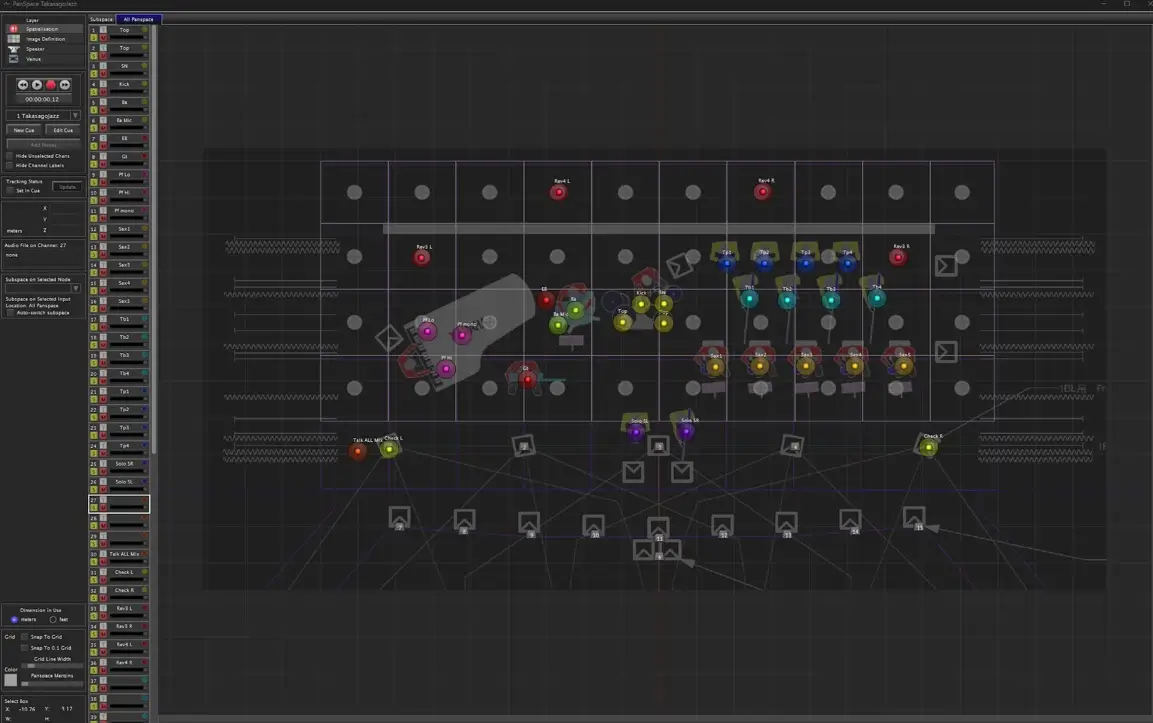
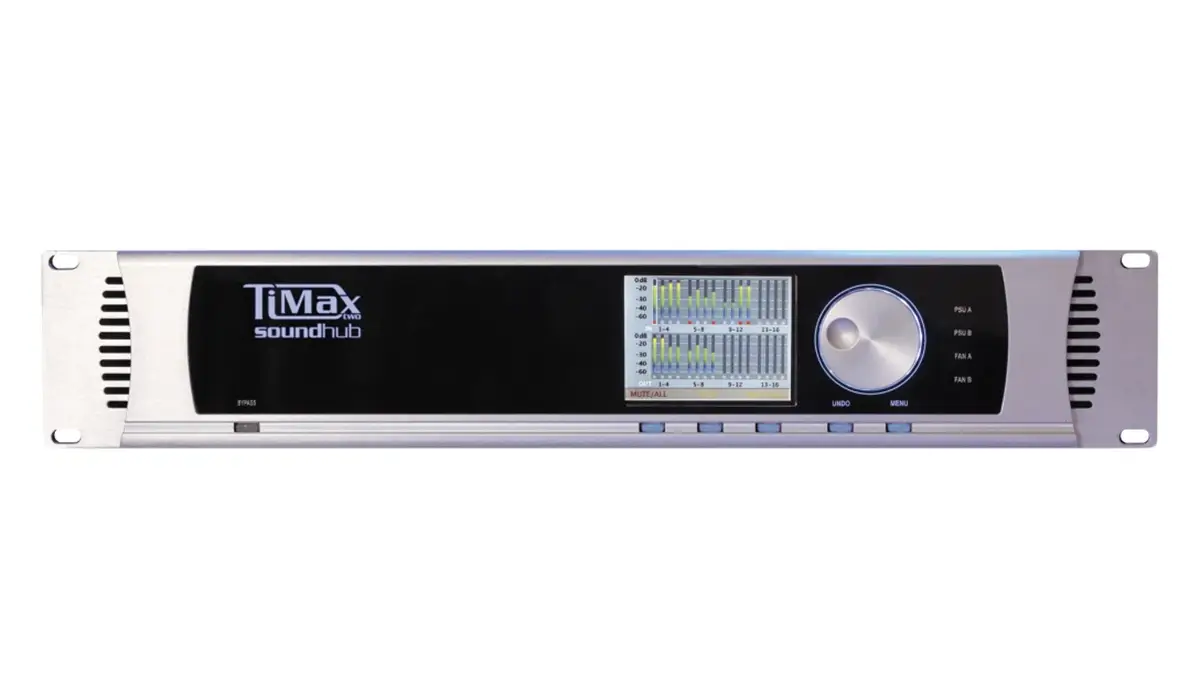
In SoundHub, the audio captured by microphones for each instrument is intuitively placed on the user interface as colorful objects. SoundHub calculates the appropriate output level and delay for each speaker in real time, creating an immersive space that makes you feel as though the sound is coming directly from each instrument.
Loudspeakers and Power Amplifiers
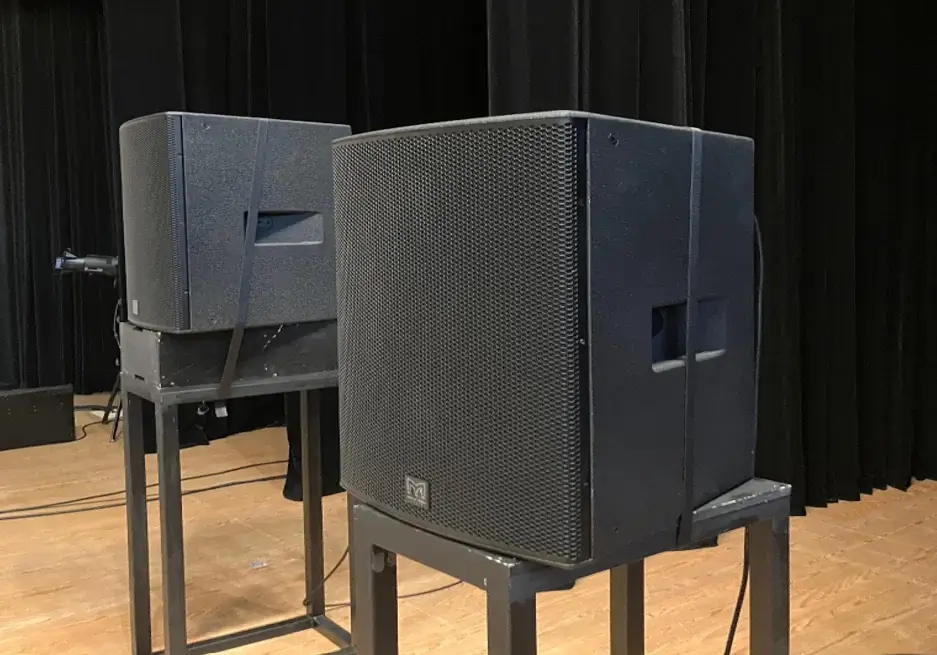
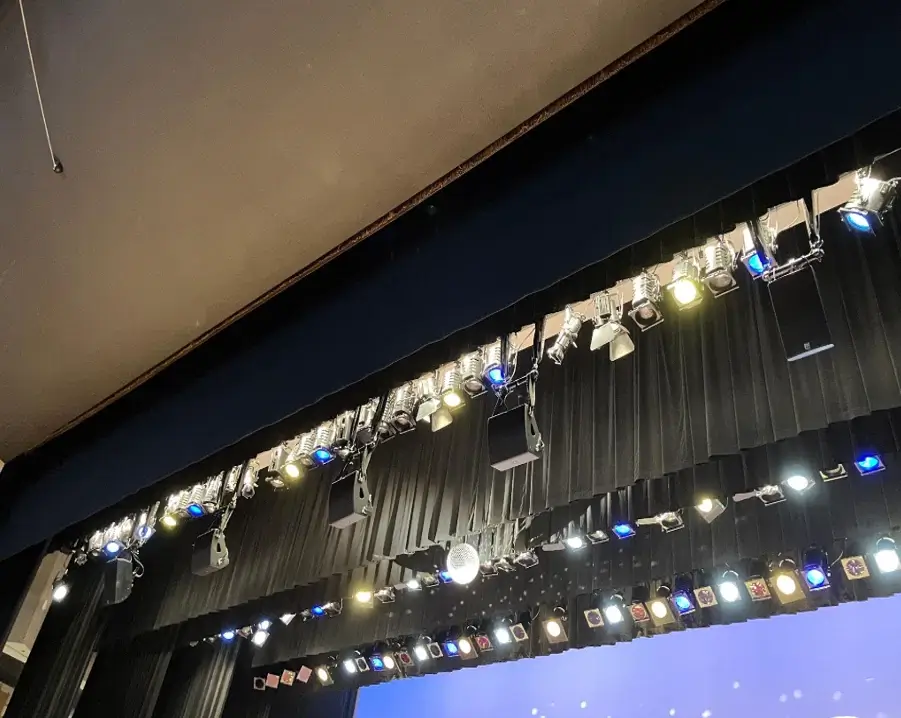
All loudspeaker systems used at the event were from Martin Audio. The main system for the audience consisted of five suspended speakers: two CDD12s and three LE100s. Two SX115 subwoofers were installed in the center to cover the entire audience area, all driven by Martin Audio’s iKON iK42. In addition, nine ADORN A55 lip-fill speakers were used.
Each loudspeaker received an independent audio signal processed immersively from a TiMax SoundHub, resulting in a total of 15 speaker systems.
Could you please describe the speaker specifications required for the immersive system and explain your reasons for selecting the LE100, A55, and SX115 for the system?
OSA Stage Arts’ Mr. Nagai :
Regardless of the manufacturer, I believe speakers with relatively wide dispersion are advantageous for immersive audio for live events. However, in most cases, while wide coverage is desirable toward the rear of the hall, it’s often fine if the coverage at the back is slightly narrower than at the front. Martin Audio’s CDD horn is a speaker with an asymmetrical coverage area that perfectly solves this problem. For this project, we set up five CDD12 and LE100 loudspeakers above the stage to match the same horn and driver. Ideally, we would have used five identical loudspeakers. Unfortunately, due to the limitations of our inventory, we opted for a mixed configuration using models with the same horn and driver.
The A55 is a speaker that we have recently introduced in multiple units. Above all, I think it offers excellent performance considering its appearance, size, and cost.
My encounter with this speaker was during a meeting with the former Audio Brains sales representative. The A55 happened to be next to my ear as a test speaker for initial sound testing. It sounded very good, so I immediately purchased it to use as a background music speaker for our warehouse, which we were looking for at the time, but that project fell through.
Although I liked the sound quality, opportunities to use a loudspeaker of this size were somewhat limited, so I hesitated to invest further. However, more recently, we introduced about 10 A55s to replace some small speakers from another manufacturer. After using them as front fills for a theatre production, the results were quite good. They have since become our regular choice for front fill in venues where such high power is not required. There are occasions when I would like a little more power handling, so I’m also interested in models higher up the range.
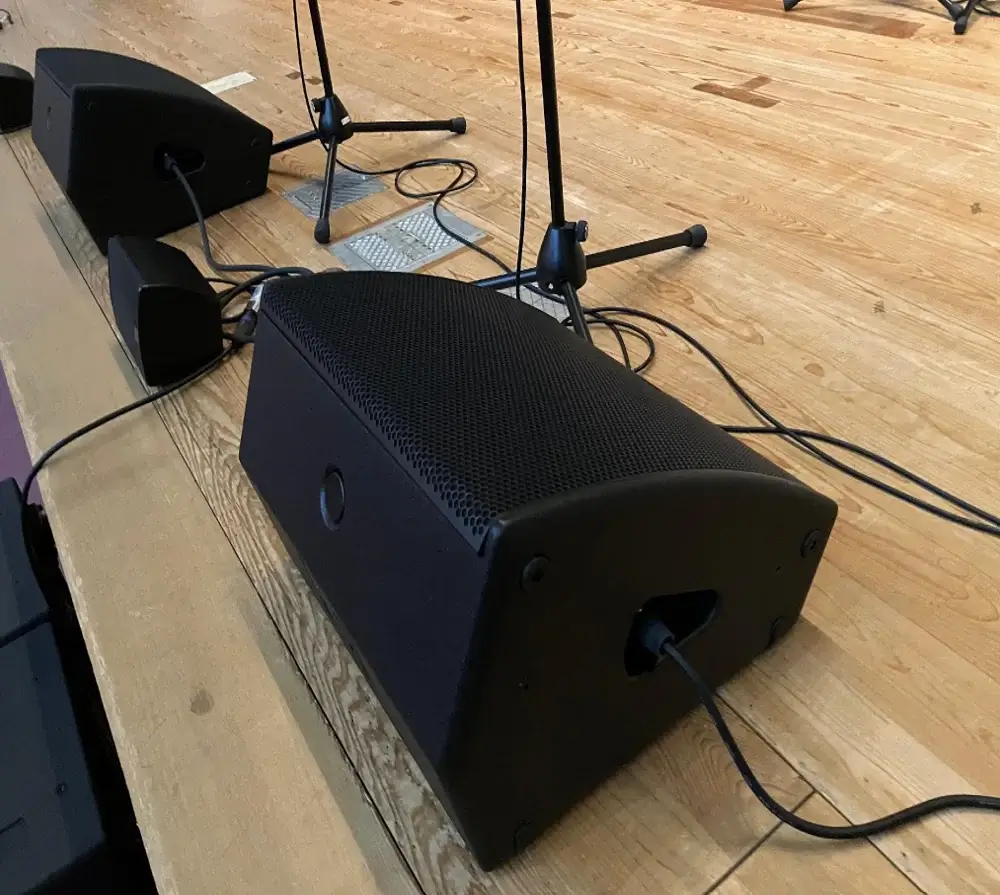
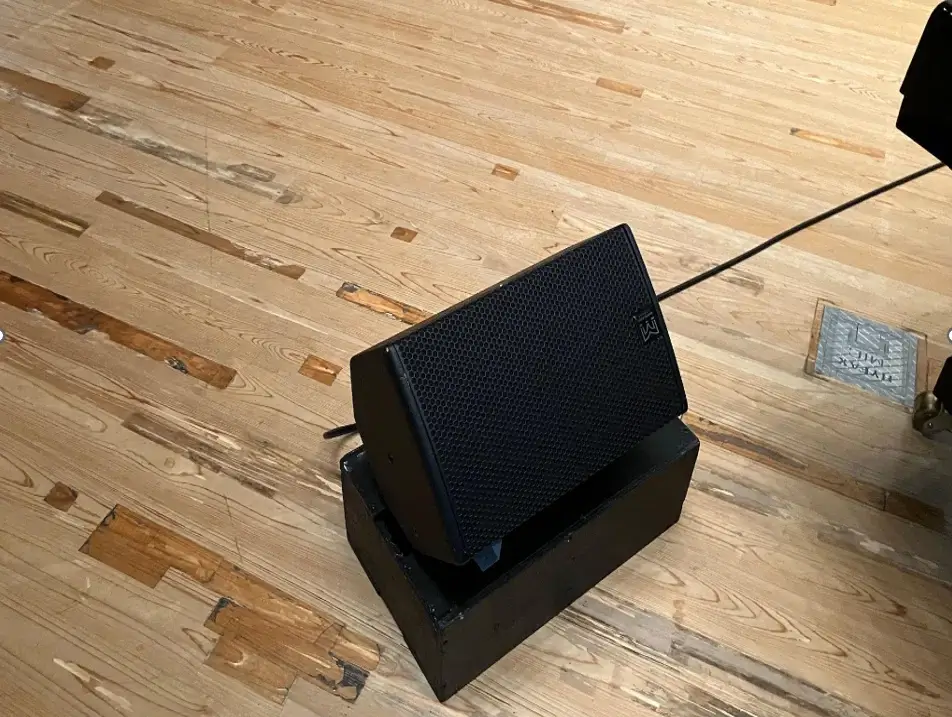
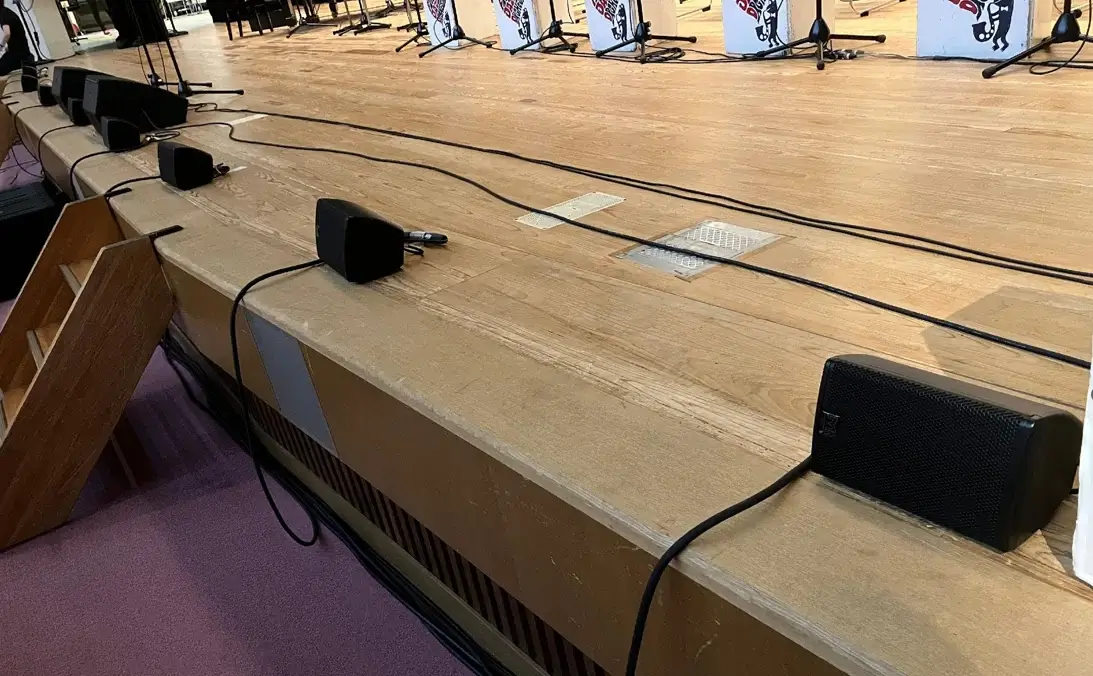
The monitor speakers on stage are also lined up with Martin Audio speakers. For the soloists who were the stars of the jazz concert, there were two LE100s, one Blackline X8 each for the piano and drums, and two THSs for the brass players.
Could you please explain the reasons for selecting each monitor speaker for each part?
OSA Stage Arts’ Mr. Nagai :
Currently, we mostly use Martin Audio monitor speakers.
Ideally, we’d like to use something the size of the LE100 for the drums as well. However, because the LE100s were flown above the stage for this production, we reluctantly used the Blackline X8 instead. Even so, I think it still delivered the output we needed. The THS monitors we use for the horn section are more powerful than neceessary, but I think it’s a speaker that can handle even large stages with an opening of about 3.6m. We also used them recently as side fills in an arena, and they had absolutely no issues delivering the required output.
Comments from Soundwork Ashley
Please share your impressions of using this system, as well as your outlook and challenges regarding immersive sound in PA (Public Address) settings in the future.
Soundwork Ashley’s Mr. Asahara :
My relationship with the Takasago High School Jazz Band dates back to when the Japan Audio Engineers Association was supporting their charity concerts, and I’ve now been personally involved for over 20 years. During that time, various manufacturers have supported us with the latest mixers, loudspeakers, and other equipment, allowing us to continually use the newest technology to support the sound of their concerts.
Thanks to the suggestion and support of Mr. Nagai from OSA Stage Arts, we introduced an immersive audio system last year, and I have been responsible for operating it ever since.
Normally, big band performances are well-balanced, with the PA system serving as reinforcement for the acoustic sound. However, since switching to immersive audio, we’ve been able to position the amplified sound to match the performers’ actual locations on stage. This allows us to adjust levels while comparing them with the natural sound, making the mixing process much smoother. In addition, since the sound of each part is reproduced from its position in the audience, we can always deliver an ensemble that is close to the live sound, no matter where you sit. I feel that this has been very well received by the audience.
We intend to continue providing immersive audio support for Takasago High School Jazz Band’s charity concerts whenever possible. To do so, it is crucial to thoroughly explain and ensure that the band’s advisor and members (especially the club president, concertmaster, and section leaders) understand the difference between traditional sound support and support using an immersive audio system. I believe this is true for any concert, but ensuring that the performers understand the system is essential. I also strongly feel that this concert was only possible thanks to the support of Audio Brains and Mr. Nagai from OSA Stage Arts.
Personally, I believe that trying to manage the immersive system while also mixing the show means one of those responsibilities will inevitably receive less attention, making it difficult to fully focus on the performance. Of course, there are many people who are capable of handling both roles, but in my case, I prefer to keep the operation and system management separate.
Thank you very much for your support. I would also like to express my sincere gratitude to everyone in the Takasago High School Jazz Band.
Click here for the original article