Martin Audio is making significant strides in reducing its environmental footprint through the strategic use of recycled materials, particularly post-consumer recycled plastics. This commitment is a critical part of their overall sustainability strategy, aimed at integrating recycled materials into their manufacturing processes and contributing to a circular economy.
Martin Audio’s approach involves using detailed data to make informed decisions about sourcing recycled materials. This ensures that the use of recycled plastics does not compromise the quality or performance of their products. “The focus is on extending the lifecycle of materials and products, thus minimising their environmental impact from the outset,” confirms marketing director James King.
So how will this work in practice? Over the coming months, Martin Audio will gradually introduce post-consumer recycled plastic into components for ten of its product lines. This includes using 65% and 85% recycled ABS plastic, depending on the specific flammability requirements for each product. The transition to these recycled materials will take place as existing stocks of components are used up.
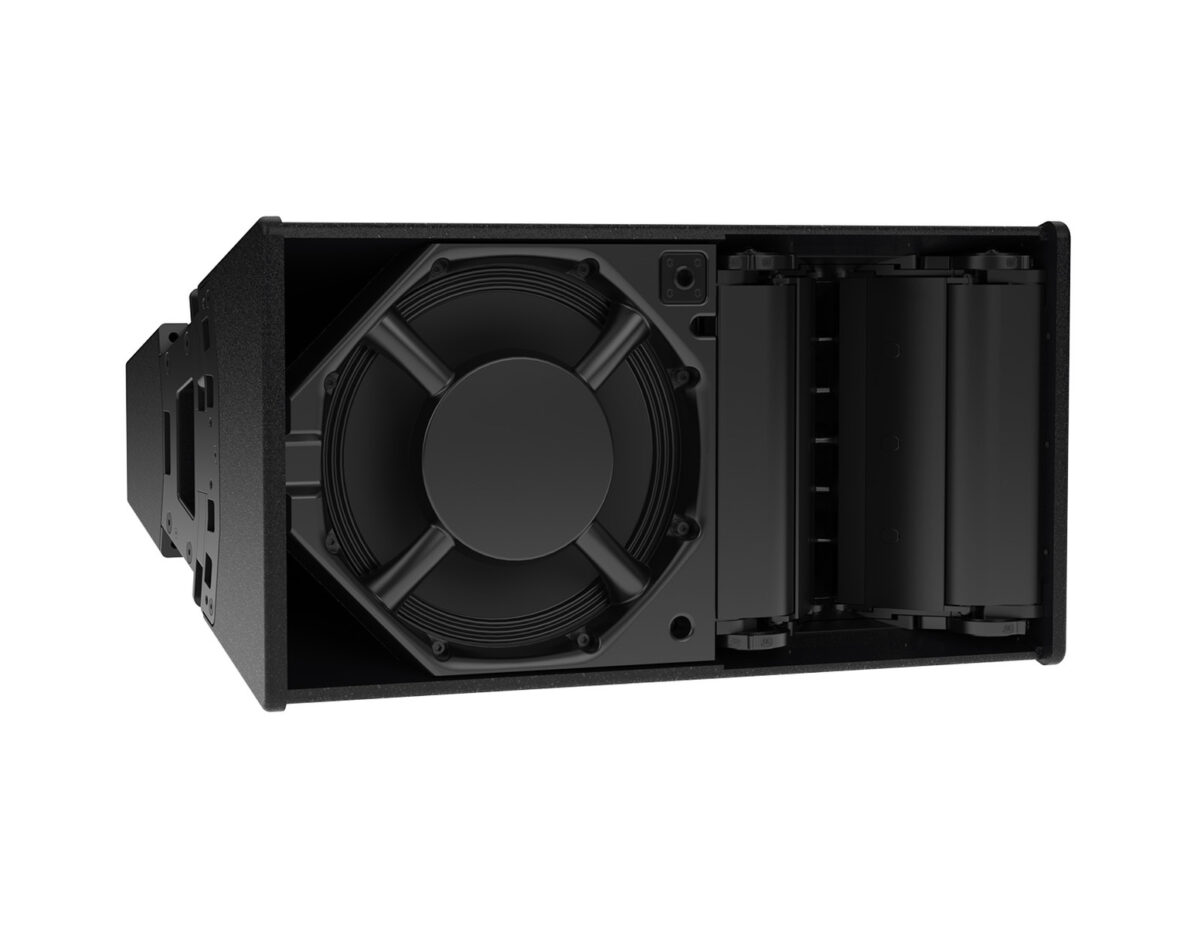
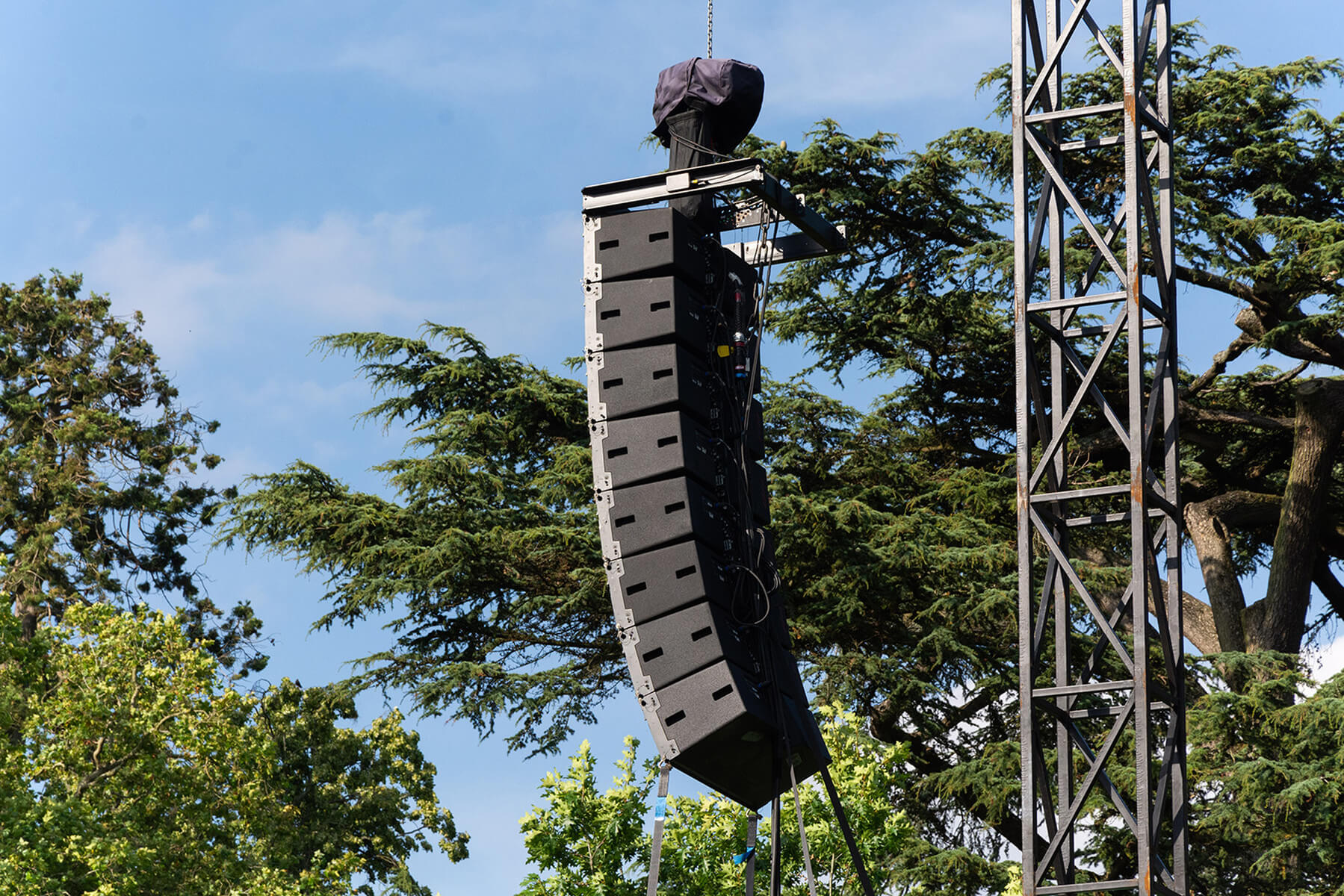
By the end of this year, Martin Audio anticipates that recycled plastic will be incorporated into components such as the phase plug which features in TORUS constant curvature loudspeakers alongside other elements which feature in products from Wavefront Precision, CDD Live 8, XD and Blackline X series.
Martin Audio’s adoption of recycled plastics significantly reduces the carbon footprint of its products. By switching to 85% post-consumer recycled ABS plastic from standard ABS plastic, the carbon emissions per kilogram of material drop from 4.6 kg CO2e to just 0.8 kg CO2e. This substantial reduction underscores the environmental advantages of using recycled materials.
“As a global leader in the pro audio industry, this is a further opportunity for us to demonstrate climate leadership and values, defining good environmental practice,” said James King. “We have made strides within the efficiency practices at our HQ; we’ve planted over 60,000 trees through Ecologi, and we’re excited to see the adoption of recycled plastics come into fruition. There’s plenty more work to be done, but we’re making progress.”
UK: Long-term Martin Audio rental partner, W E Audio, recently underlined its commitment to the British manufacturer, by making a massive investment across the latest Wavefront Precision line array portfolio.
This not only reinforces its promise to deliver best-quality sound for its core event and festival markets, but broaden the scope when it comes to large scale international touring.
Founded by Wayne Barker, W E Audio’s upgraded inventory is headed by Martin Audio’s flagship WPL large format line array, and SXH218 subwoofers, as well as FlexPoint FP12s, TORUS, and XE500 wedge monitors. At the same time, in order to give them further scalability and flexibility, the company has also invested heavily in the smaller WPS and WPC line arrays—all delivered in recent months to its base in Oxfordshire.
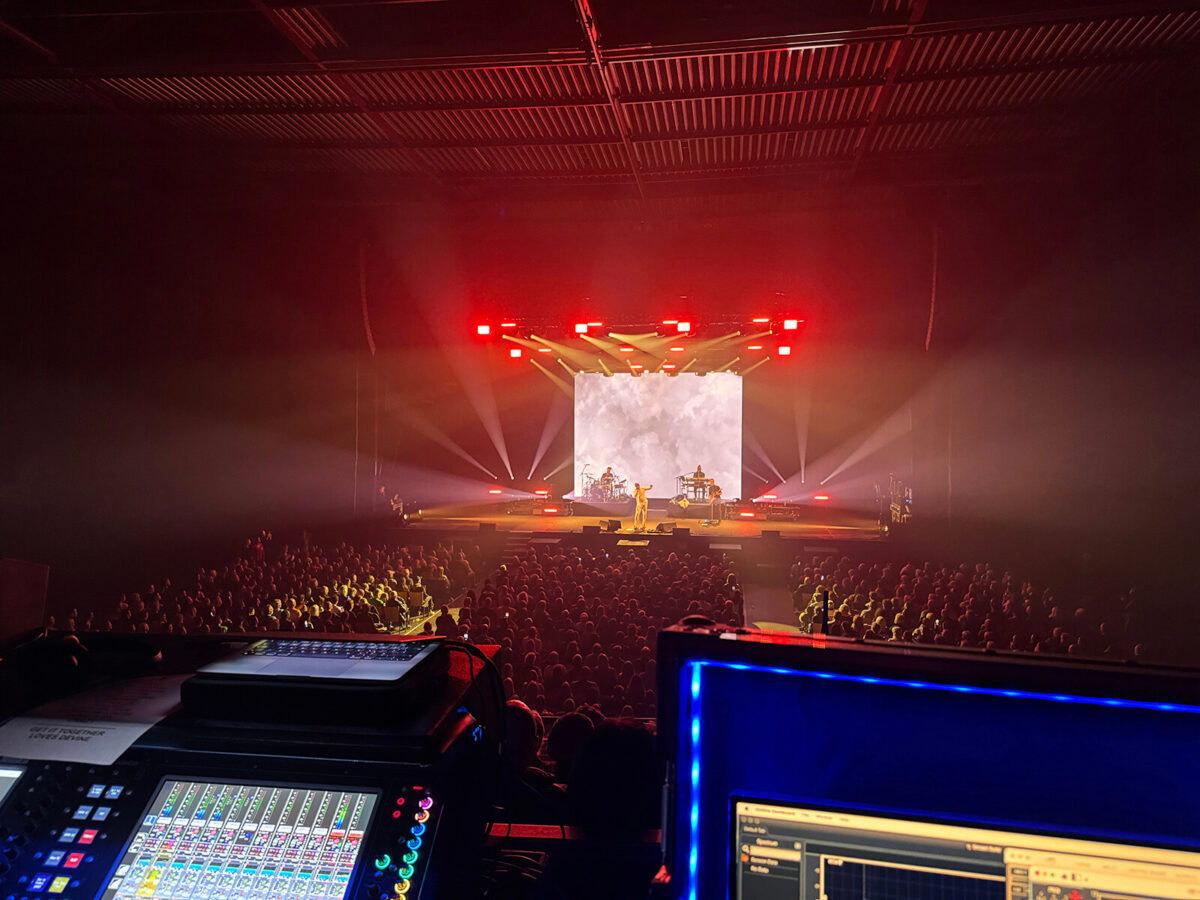
Last month saw the production company’s highest profile deployment of the large-format WPL to date—on Seal’s European tour. The core PA design is based around 12 WPL cabinets per side, with six WPS units for front fills, TORUS T1230 speakers on outfill duties, and 16 SXH218 subwoofers—powered by iK42 amps in bridged mode.
WPL offers the flexibility and reliability we need.
System tech Ryan Bass, praised the speed and ease of getting the PA rigged and how he faced the unique challenge of sub placement due to the stage design (with a set of steps emerging down from the stage, allowing Seal to engage with the audience).
His careful attention to the subwoofer placement ensured uniform delivery across the venue, providing a seamless audio experience in keeping with Seal’s dynamic stage presence.
As for the artist’s experienced sound engineer Tim Weidner—an association that dates back three decades—he said the Martin Audio rig had made the transition from his more familiar studio habitat to the FOH position, a seamless one.
He explained, “As far as setting up the system I leave this to the team. All I know is at the end of the day whether the PA sounds good or not … and this particular PA sounds fantastic, probably one of the best I’ve heard. I’m very impressed with how punchy and clear it is.”
Being from a studio background, he says he could simply relax into the mix—knowing that it had been set up properly—and just enjoy the whole mixing process. “These guys really make it easy, so it’s been good fun.
“In fact it reminds me of sitting in between the speakers in a control room—[the Martin Audio PA] is just not harsh, whereas other systems that we’ve used have been a little bit harsh, especially in the high mids. This was very smooth, and the low end is very tight, so I love it. In fact I want this one all the time!”
The behaviour of WPL had fully justified the investment, which had been the outcome of a rigorous evaluation process. As Wayne Barker explained, W E Audio had explored multiple options before choosing to maintain their relationship with Martin Audio—a move that reflects the strength of the partnership.
“WPL offers the flexibility and reliability we need,” stated Barker. “Our clients expect quick, seamless deployment and exceptional sound quality, and WPL delivers just that. It’s the ideal choice for our evolving needs.” This positions them as a key player in the UK market.
This was echoed by Martin Audio Sales Director, Brad Watson: “W E Audio’s investment is a great example of the synergy between our two companies. Their ability to quickly deploy high-quality sound solutions aligns perfectly with our mission to provide best-in-class audio technology.”
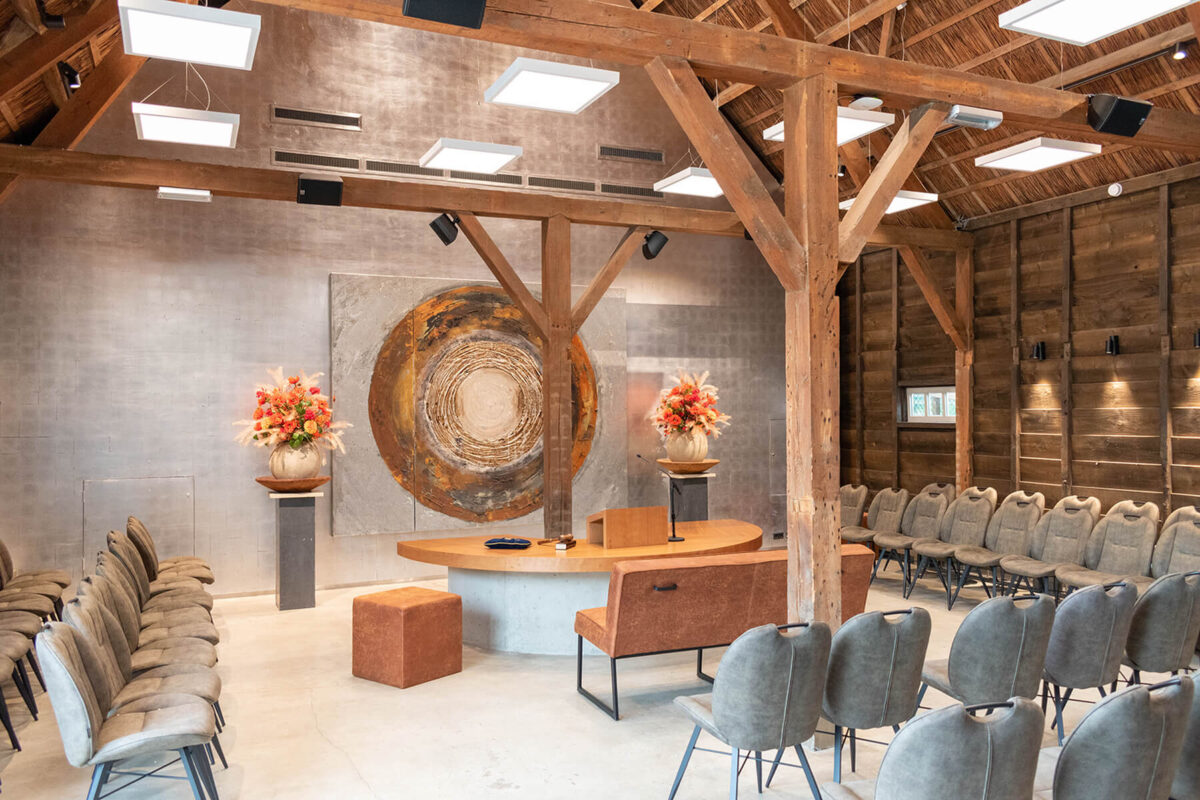
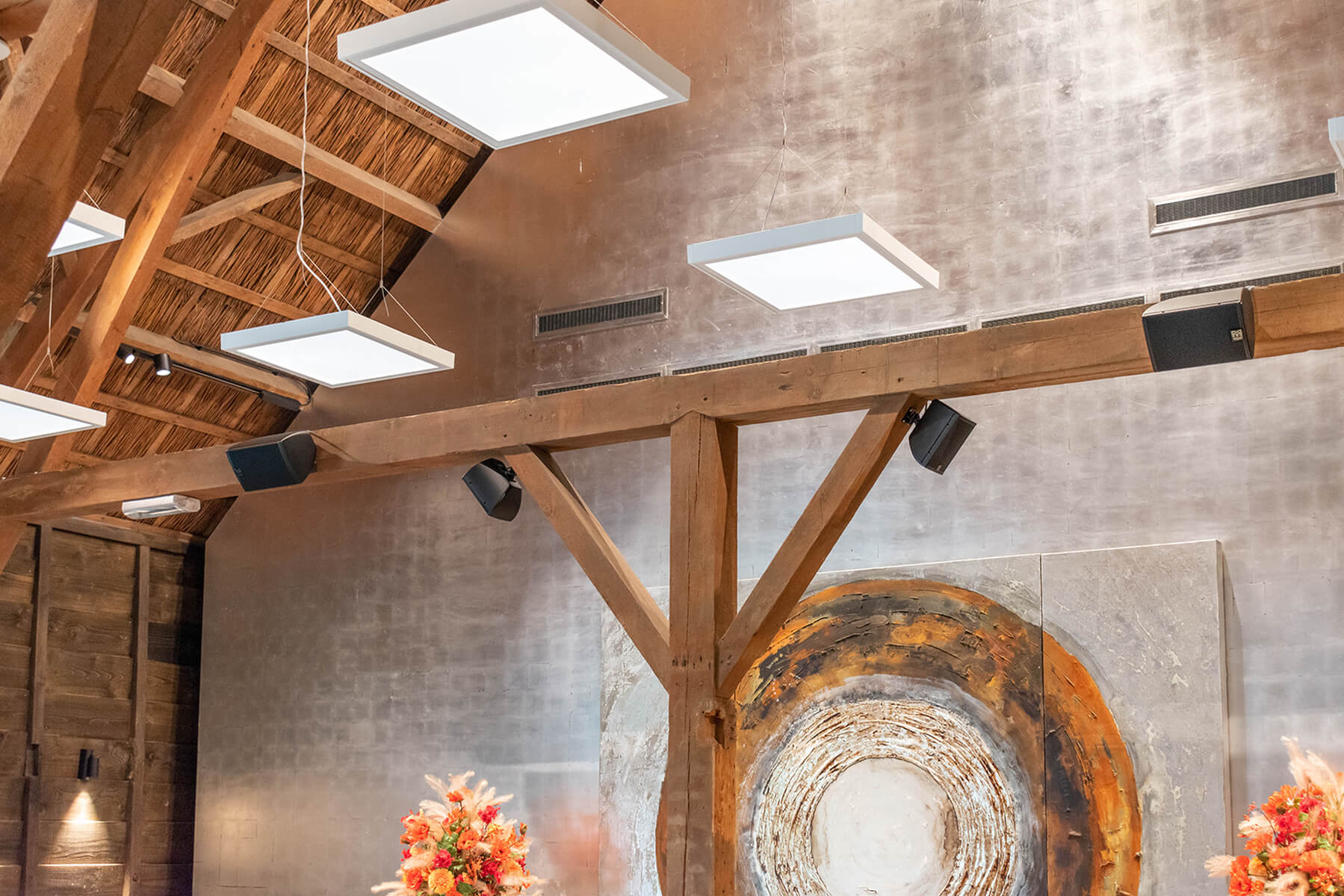
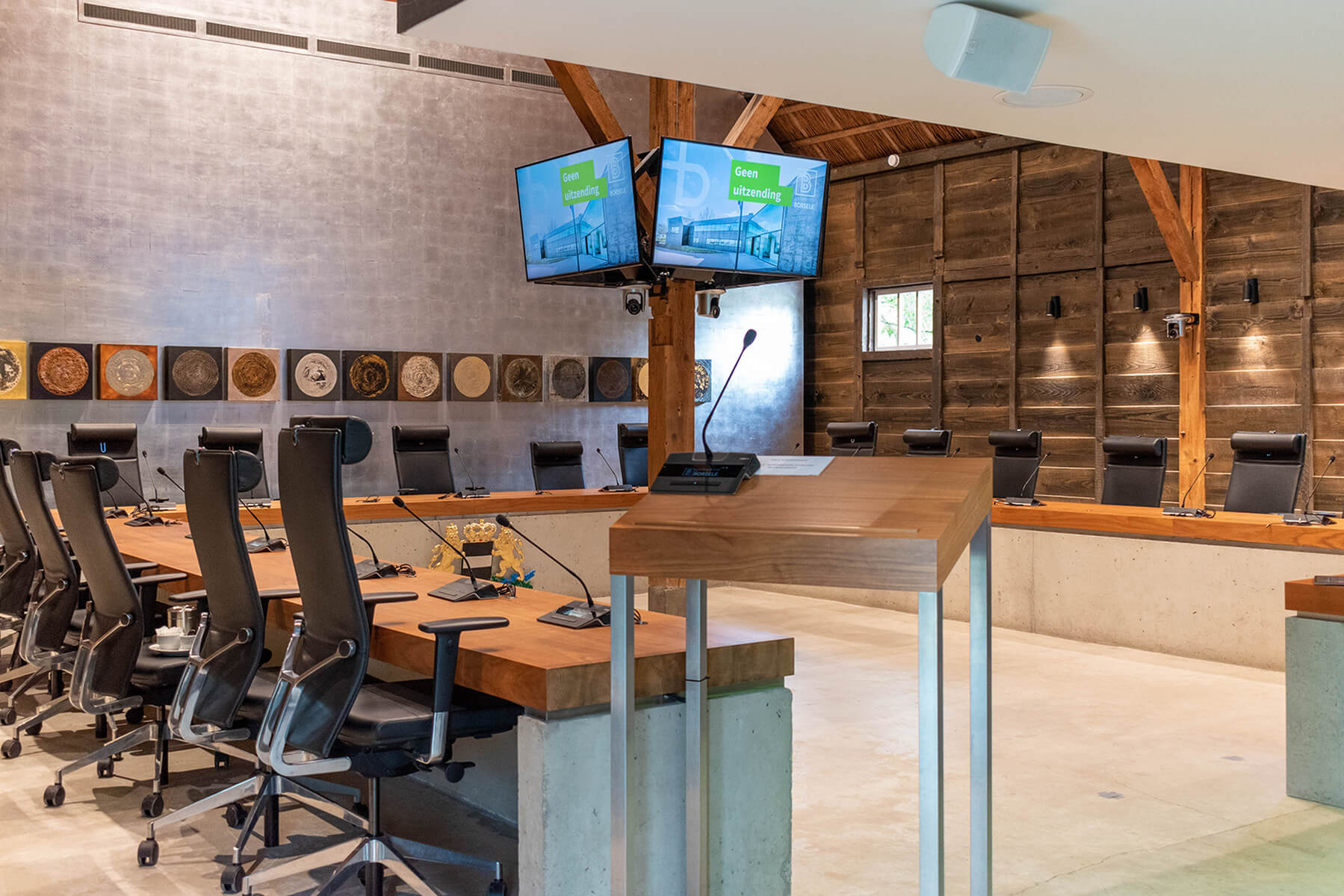
NETHERLANDS: One of the more unusual venues that has recently been installed with a Martin Audio CDD sound solutions, is a hybrid wedding venue and town hall council chamber, situated in the Dutch municipality of Borsele.
Martin Audio partners and audio-visual specialists, FvL Audio, carried out the installation at the venue, known as ‘De Boerderij’—a traditional style, 100-year-old farmhouse.
Over the years, FvL owner Frank van Loenhout says his company has carried out multiple touchscreen installations in Borsele, which is located on a central location in the province of Zeeland. He has also undertaken numerous other upgrades in the neighbouring municipalities in the region “although mostly the audio systems were not as old as here!”
At De Boerderij, FvL Audio were tasked with replacing a 20-year-old ancient 100V line system. “Although the system still worked, it sounded terrible,” he says. “We were asked to install a system suitable for weddings in the Wedding Hall, Council Meetings in the Council Chamber, as well as other events.”
Frank van Loenhout had fallen in love with Martin Audio’s coaxial technology after acquiring FlexPoint FP8 for their rental fleet (*) And so when it came to the De Boerderij installation, he approached Martijn de Jong at Ampco Flashlight Group, Martin Audio’s Dutch distributor, for advice, and promptly received a pair of the hugely popular CDD6, using similar coaxial differential dispersion technology, for testing. “The sound quality was great, and so we decided to use them in our design for De Boerderij,” he explained. “It was a great match for this venue—placement was easy, and coverage fits the venue very well.”
The mayor can speak wirelessly to every room in the building, and be assured of great sound quality,
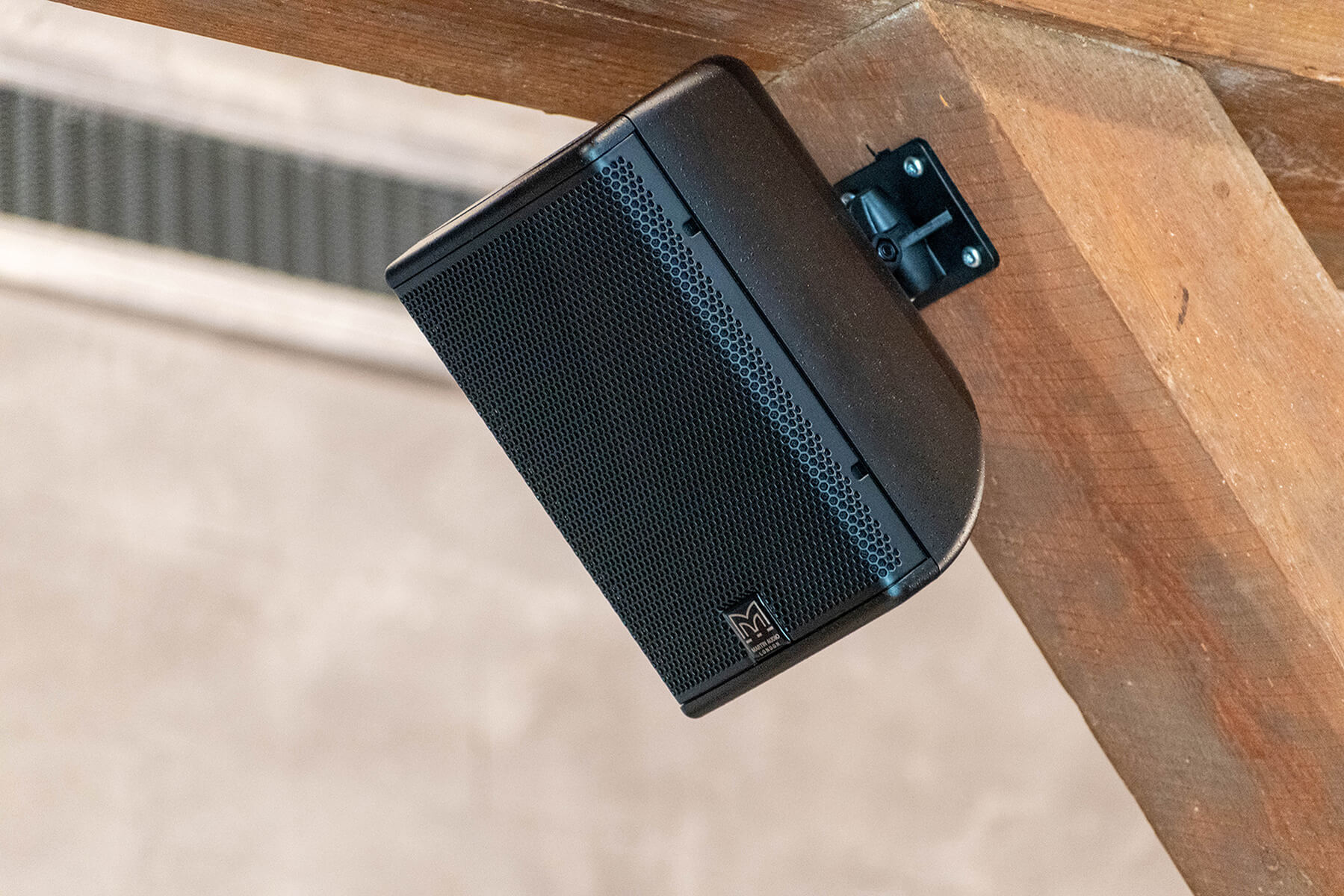
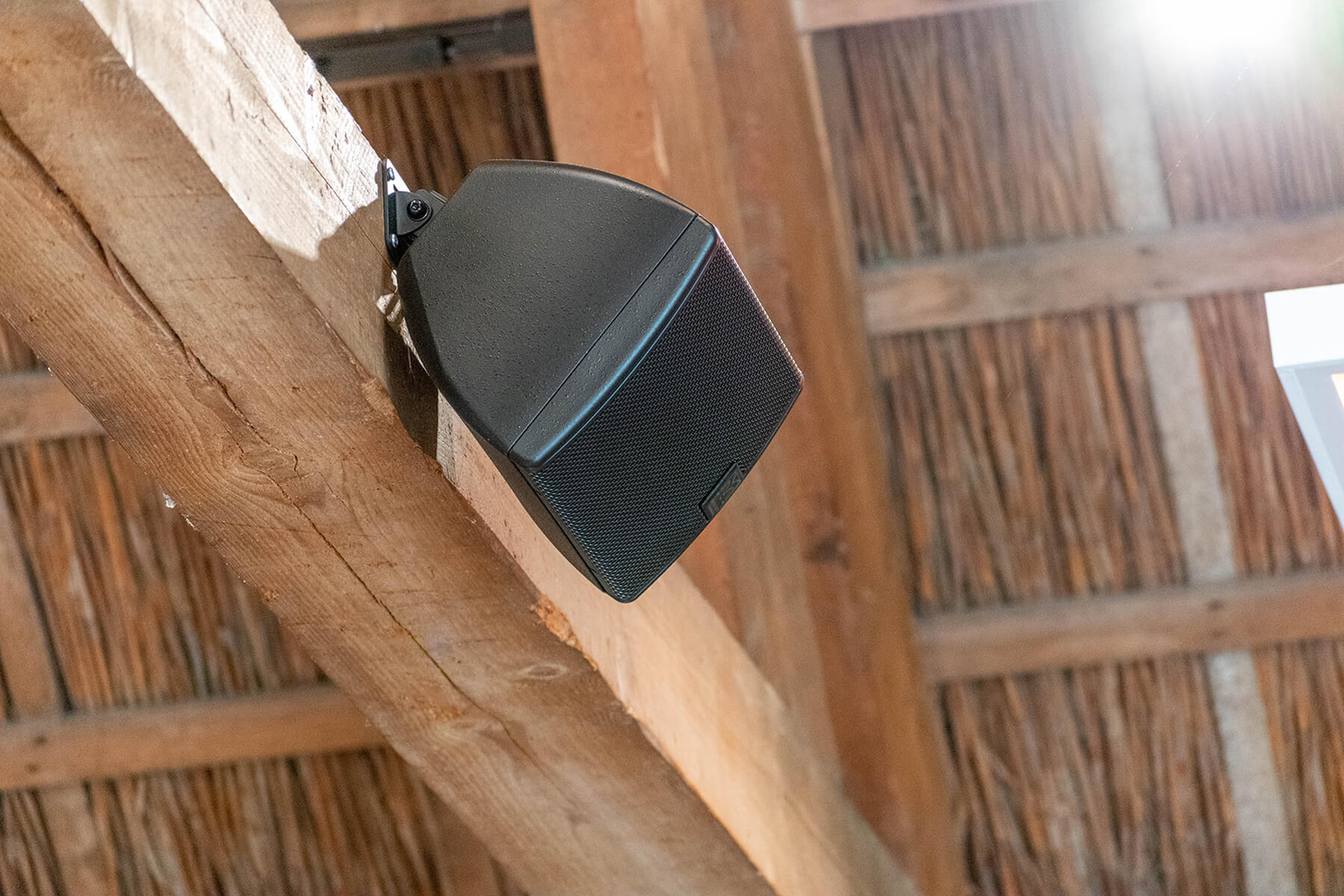
At the main entrance, a pair of CDD 6 are set in the roof and delayed—tapped to the distance between the entrance and the Wedding Hall (to the left) and the Council Chamber (to the right) so that walking through the various rooms no annoying delay is audible.
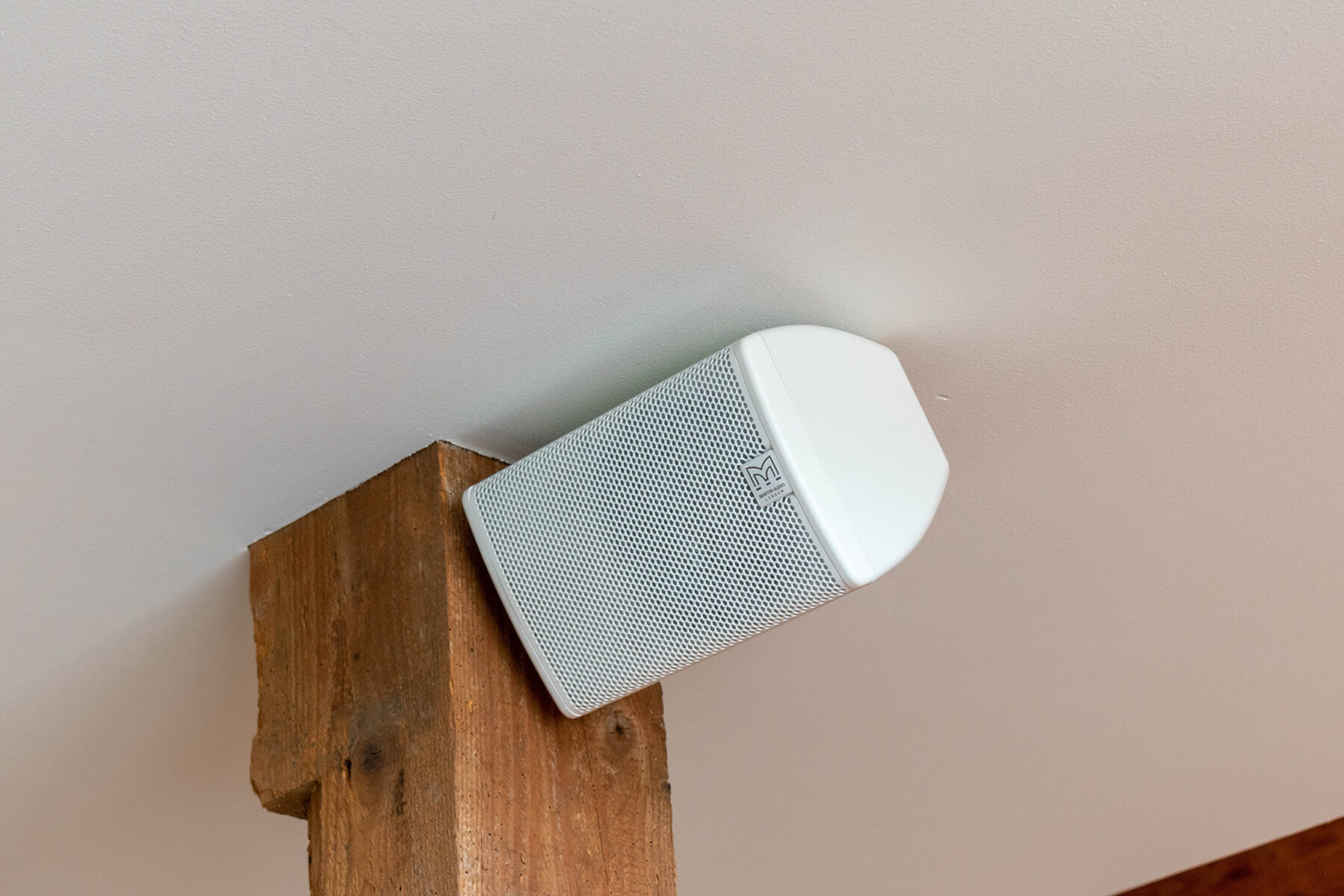
The Council Chamber is served by a conference system. Here FvL have installed four CDD6 overhead, and a further pair above the audience (at balcony level). Meanwhile, under the balcony is a Martin Audio ADORN A55 fill speaker in white, appropriately delayed.
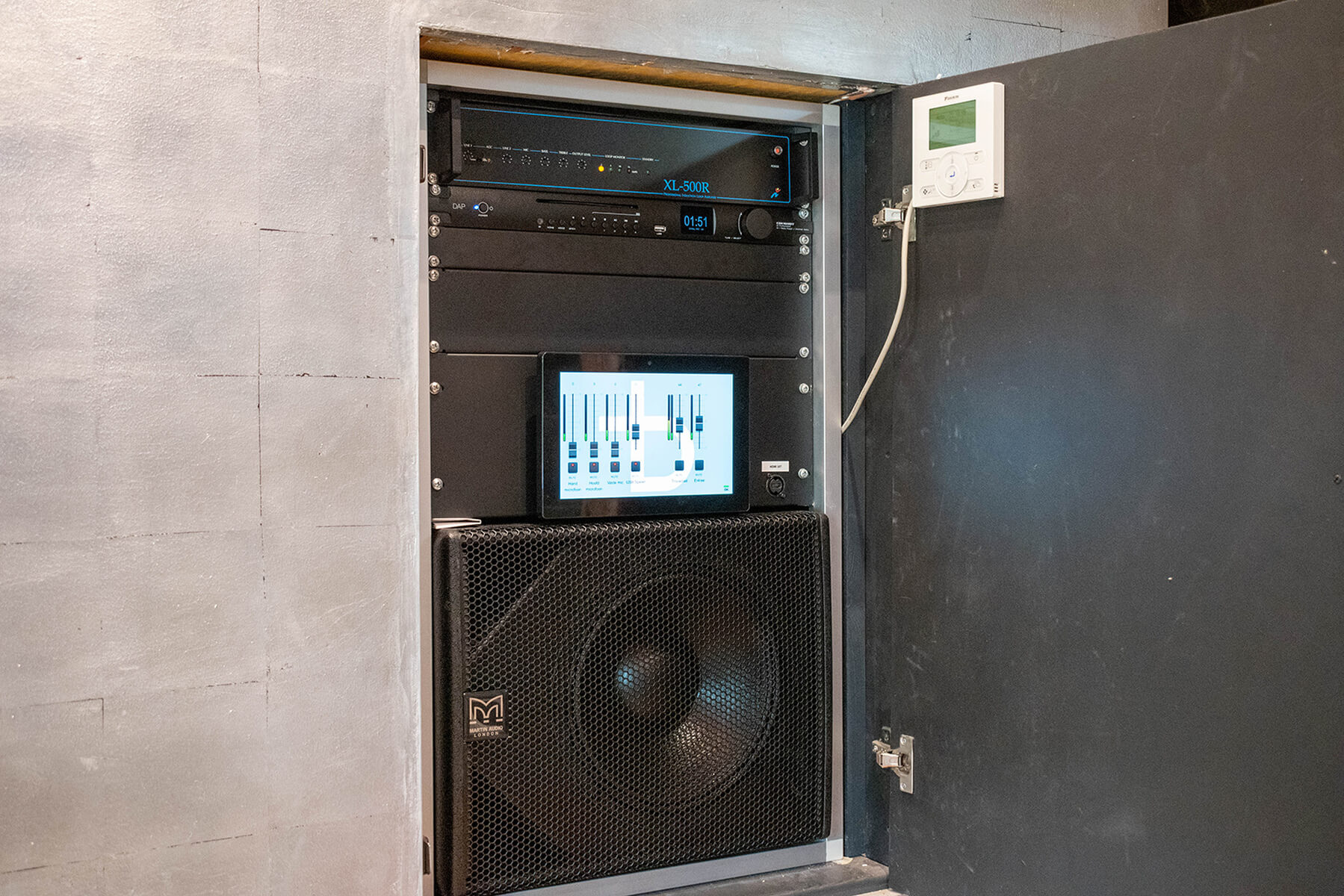
In the Wedding Hall, upgraded sound reinforcement was required for speeches and music playback from USB or computer. In this location are four further CDD 6 speakers, with a pair of CDD 5 speakers as infill, and a concealed SX112 (1 x 12in) subwoofer for the low frequencies. “It was forbidden to have the subwoofer visible,” notes van Loenhout.
The entire system is on a digital routing matrix, so that for other meetings, they can send any source to any room, he explains. “In other words, the mayor can speak wirelessly to every room in the building, and be assured of great sound quality.”
The client is also delighted with the upgraded sound—which ensures both council proceedings and wedding celebrations can be heard with greater clarity and intelligibility. Administrators at the venue described the sound upgrade as “a major step forward”.
(*) Footnote: FvL Audio’s move into the Martin Audio family had begun when, in December last year, they were looking to replace some of their hire system speakers. They auditioned several brands “but the clear winner was the [FlexPoint] FP8,” said the FvL owner. “So we immediately bought eight of them.
“Dcase provided nice flight cases, K&M the round-base speaker stands, and it’s powered by a Martin Audio iK42. And so we are not only providing superb sound quality but also great looks.”
These have rarely been in the warehouse, he says. “We use them for all our corporate events, mostly at Van Der Valk Hotel Middelburg, but also recently in the VIP area at our local football club and in October at the Oyster Festival in Yerseke.
“So you can say that first test drive started our love affair with Martin Audio. In fact we’ve just received our newly ordered FP4 for use as frontfills and as a mini-sound system.“
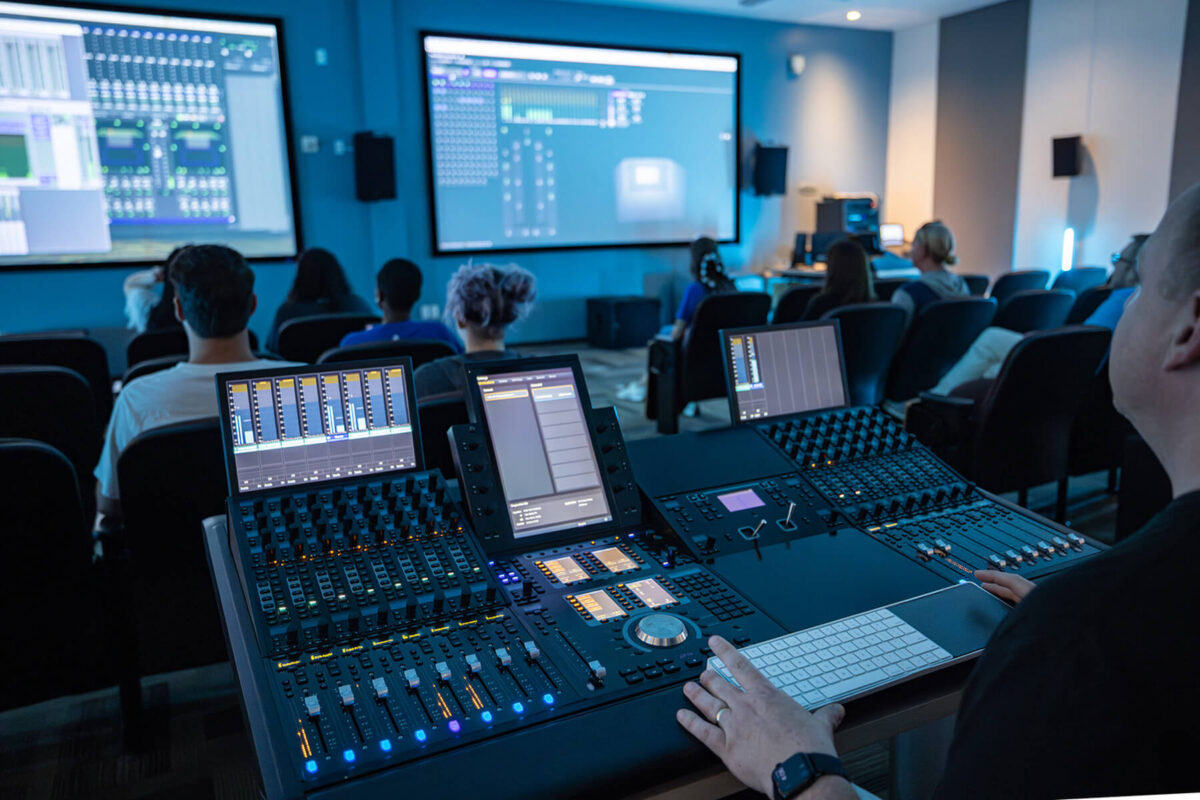
US: Specialising in Audio Production, Music Production, Show Production and Recording Arts degrees, Full Sail University recently commissioned a new Dolby Atmos-enabled facility for class sessions, workshops, listening experiences and guest lectures at its Winter Park, FL campus. Playout of the ‘objects based’ spatial concept is uniquely via 26 carefully selected, and strategically located loudspeakers from the Martin Audio catalogue.
One of the largest, and most advanced Dolby Atmos rooms on a university campus, according to Education Director of Audio Arts, Brandon Egerton, this had been a topic of discussion for a number of years. “But we needed to make sure we were wrapping our arms around the right technology. We felt it was important to have a solid understanding of both the emerging technology and also how the industry intended on adopting it and so we intentionally took our time.”
Along with Darren Schneider, who is in charge of Full Sail’s Advanced Session Recording they utilised existing industry collaborations to gain “a really intimate perspective of the production workflow.”
“We already have a 7.1 dub stage on campus, but we wanted to create an additional dedicated space for our students to explore and engage with the Atmos format. The biggest challenge for any educational institution is the ability to teach a larger number of students a format in an intimate setting. This new classroom facility allows us to do that.”
Taking up the story, Michael Orlowski, Director of Technical Services, explained how the classroom space was originally designed as a 5.1 large audio classroom. He noted, “This room was frequently used for courses focused on surround sound and multichannel audio, making it a perfect candidate for renovation and an upgrade to Dolby Atmos.”
Seeking the ideal playout for such discreet and localised positioning of an object-based format led Full Sail to the Focusrite Group and their engagement with Martin Audio. “Our goal in creating this space was how do we accurately demonstrate the Dolby Atmos format … hear the immersive properties of an Atmos mix and the separation between ceiling speakers, side speakers and rear speakers? And so, our approach was to consult with our manufacturers who specialize in high quality installation-class audio systems.”
“We’re extremely happy with this outcome.”
“We had a roadmap meeting with Focusrite Group where we were first looking at installation classroom speakers for [Martin Audio’s] O-Line product, giving students in the first row and students in the last row the same optimised experience.”
Schneider said that while their interest was piqued by O-Line for this application, their focus then pivoted to the discreet coaxial differential dispersion technology of CDD. The Dolby Atmos SPL spec of 85dB in the 100-seat space was achieved once they had upgraded to the CDD12 and increased the original sub capability. “Dolby has a 20dB headroom, and although we’ll never achieve 105dB we have limited maximum level that the teacher can set in the room to 85dB SPL.” A global system touch panel control panel ensures this.
Full Sail’s end result was to specify three of the largest CDD12 as a conventional L/C/R system, with students and guests enveloped in a (side/rear/overhead) surround system comprising 12 CDD8 (four per wall) and eight Martin Audio C8.1T series speakers overhead. LF extension is delivered through a pair of SX118 (1 x 18in) subs, with a matched pair at the rear,
Fellow Focusrite partners, Linea Research have provided the engine, in the form of pure Class D amplification, with a 44C10 4-channel DSP amp driving the L/C/R CDD12s and front pair of LFE’s, and three 8-channel Linea Research 88C03 assigned to everything else.
Orlowski explained how they had arrived at this integrated solution. “When we met with Martin Audio, we learned about the asymmetrical dispersion that the CDD range provided, and its ability to work well with an existing classroom that has a drop ceiling.”
Dolby were very specific about speaker placement and angulation, he said, in order to meet the specification required using Dolby’s DARDT room design tool. “Having ingested all the information on the CDD speakers it was straightforward to go through the product line to find which speakers we needed.”
Assisted by Martin Audio’s technical specialists Brad Stephens and Joe Lima, he said, “Martin Audio was great to work with. We could take those specifications, put them into DARDT, and have Dolby look at the plan.” This included roof predictions taking into account intrusion of HVAC, projection positions etc. “We could input into the DARDT and simulate what the performance was going to be, and as we made adjustments Brad and Joe would join us on Zoom calls to make changes as to how many amplifiers we were going to need.”
And it was the dedicated DSP of the Linea Research amplifiers that provided a real plus point. As Michael Orlowski pointed out, “Since this classroom would be hosting multiple degree programs and demonstrating the software of Avid Pro Tools, Apple Logic and so on, we didn’t wish to put the room corrective EQ, including delays into [DADman control software], only for any of those settings to change in a lecture, and then not be properly recalled …shifting the Dolby curve that we had tried so hard to hit.” So instead, all corrective EQ is stored within the Linea Research amps. “Everything else is set up in a flat recallable preset so we can teach the technology, but it doesn’t change the sound characteristics of what the speakers and amplifiers are doing.”
Feeding the speakers is an Avid Pro Tools AVID MTRX II. The signal comes out over Dante and passes through a QSys Core, feeding the Linea Research amplifiers, again within Dante.
Aside from their satisfaction with the Martin Audio CDD deployment, Full Sail’s takeaway was the Linea Research amplification. Orlowski further stated “Martin Audio came out and did training to run the System Engineer software. We did straight-out-of-the-box tuning and voicing with Martin Audio, and Dolby then tuned the room with two presets: one matches Dolby’s modified X-curve for music and home entertainment, the second was a more flat, corrected response. The tuning presets are stored in Linea Research, and we used the Linea Research plug-in on QSys to switch between the two tunings.”
The new room was commissioned in August, road ready for their first major event when industry legend Bob Clearmountain hosted two educational sessions exclusively for Full Sail University students in the space, sponsored by Apogee.
In conclusion, Michael Orlowski, acknowledged, “We’re extremely happy with this outcome.”
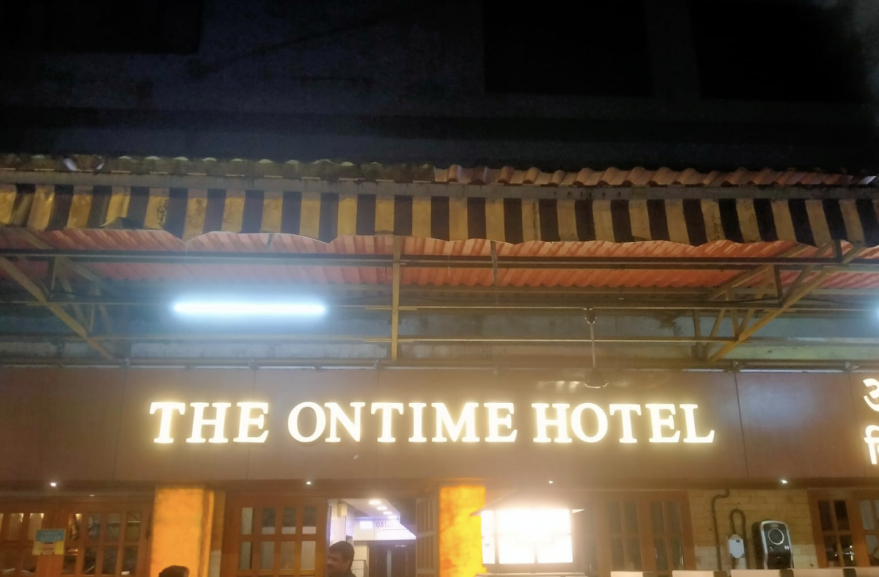
INDIA: The OnTime Hotel in Mumbai has upgraded its events spaces with Martin Audio systems, provided by VMT Distribution. Serving both corporate guests and tourists alike, the hotel chose to install new audio systems to provide top-quality audio for diverse occasions, while blending into the venue’s existing décor.
The management team wanted a new solution for various spaces, particularly the banquet halls that host corporate functions, weddings and entertainment events. One of the key considerations during the project was that the installation had to be done without disrupting the day-to-day operations of the hotel. The team had to work around tight schedules, installing the sound system in stages while ensuring the minimal impact on hotel guests and events. Additionally, the varied room acoustics across the two banquet halls required strategic placement of the speakers to ensure even sound distribution.
Several Martin Audio V.15 units were chosen for the hotel. According to VMT, the 15-inch passive 2-way loudspeaker has provided excellent sound clarity and power, handling both music and speech. Its on-wall design allowed it to be installed discreetly, preserving the aesthetics of the banquet halls.
“The installation of the Martin Audio V.15 system has been revolutionary for us at The OnTime Hotel,” commented Shusheel Rao, systems integrator, The OnTime Hotel. “The sound quality is exceptional, delivering crystal-clear audio that enhances every event we host, from corporate meetings to large-scale weddings. Not only has it transformed the overall guest experience, but it has also allowed us to meet the high expectations of our clientele.”
“The installation at The OnTime Hotel reflects a growing trend within the hospitality industry, where high-quality sound systems are becoming essential for creating immersive guest experiences,” remarked Jeff Mandot, director, VMT. “Projects like this not only meet the immediate needs of the client but also set a new standard for audio installations in similar venues across the country.”
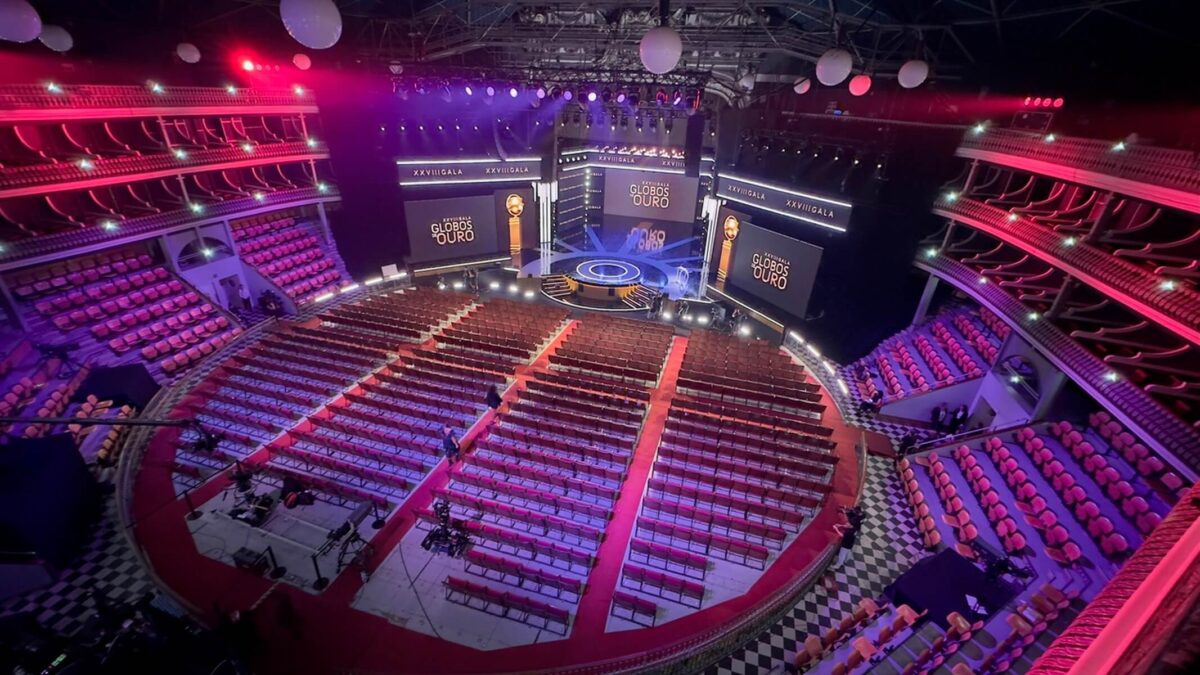
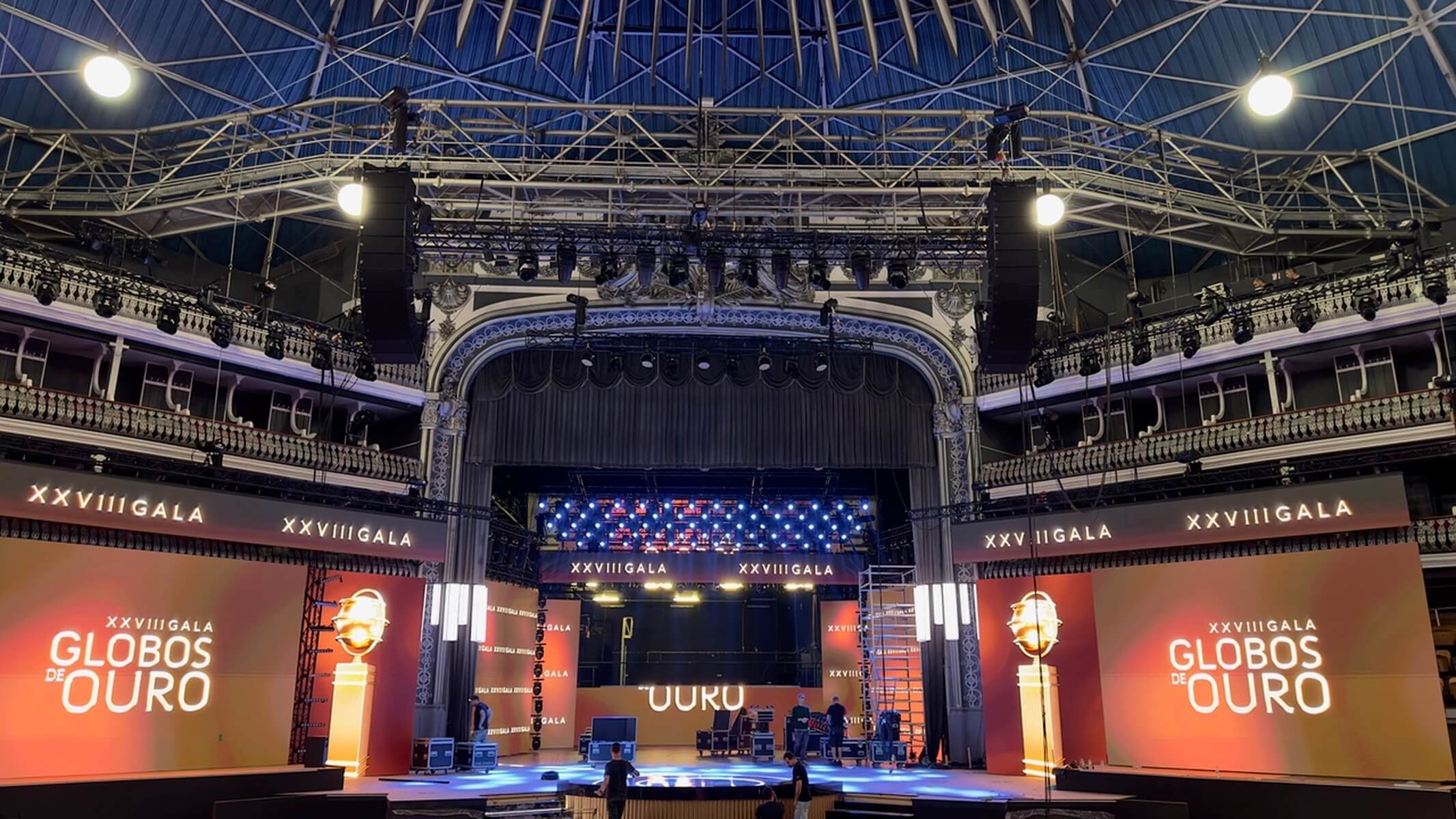
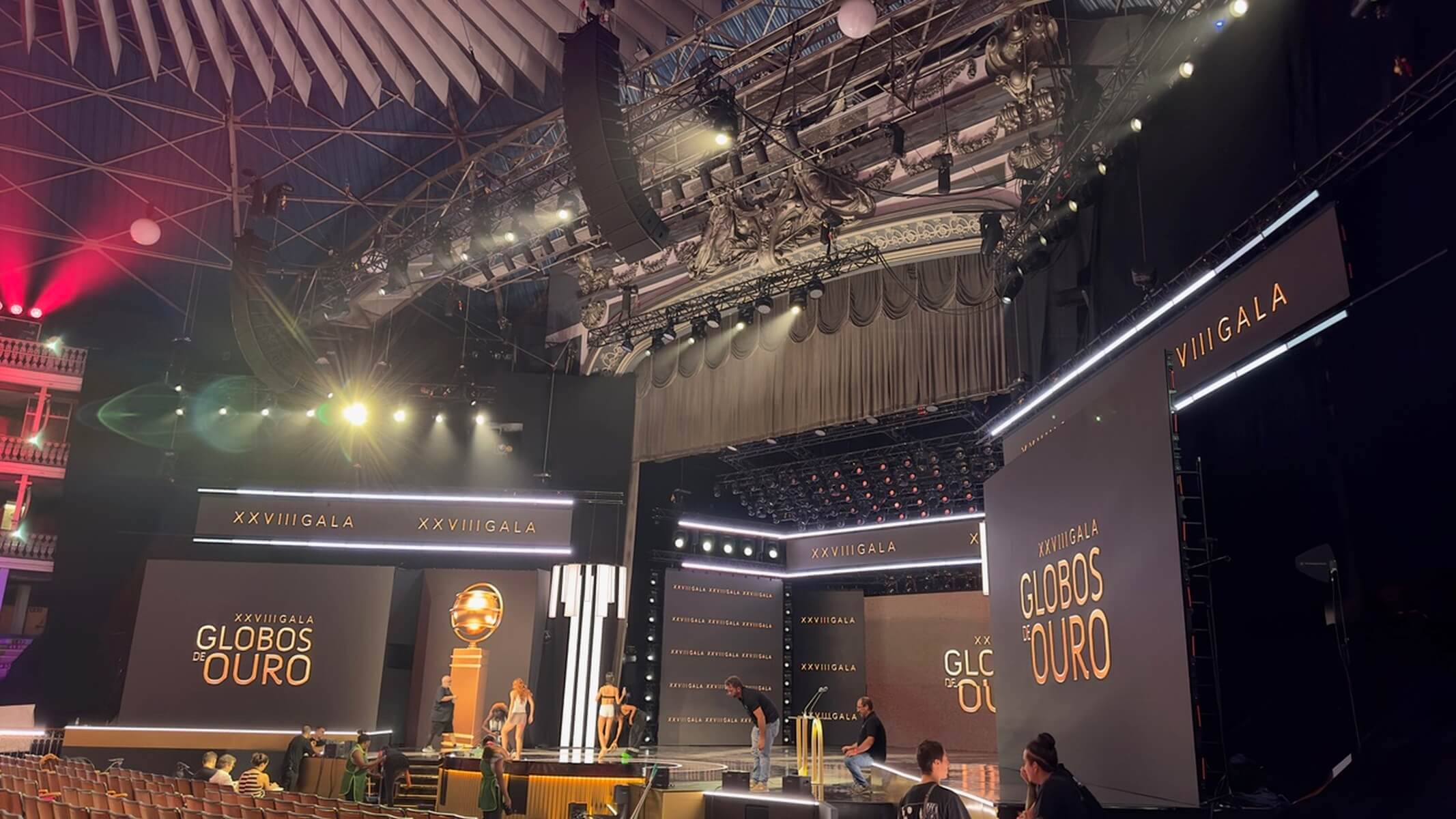
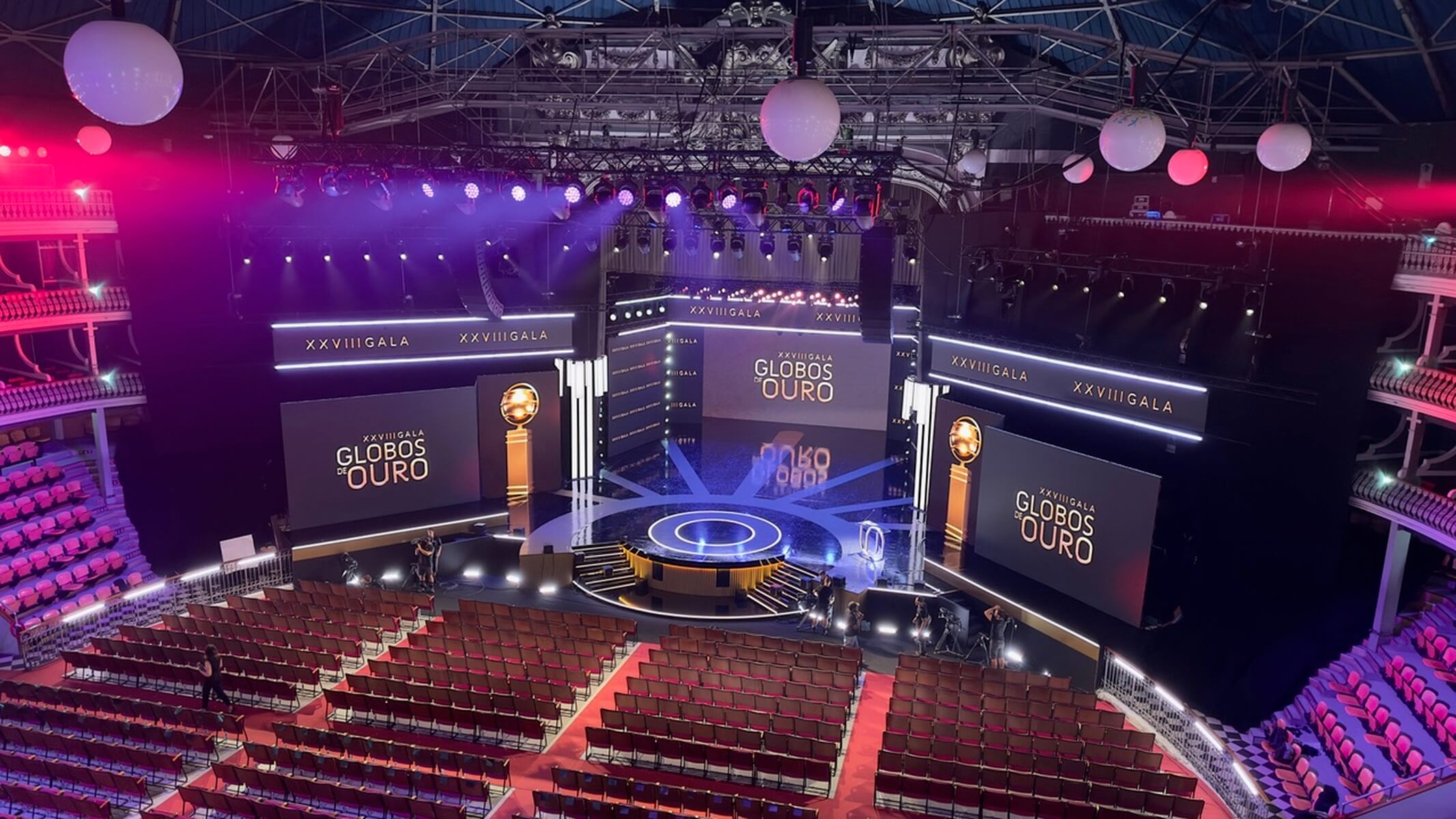
PORTUGAL: Since the inauguration of Portugal’s Golden Globes awards ceremony back in 1996, production company Auditiv Audiovisuais has supported the event with advanced sound reinforcement and broadcast.
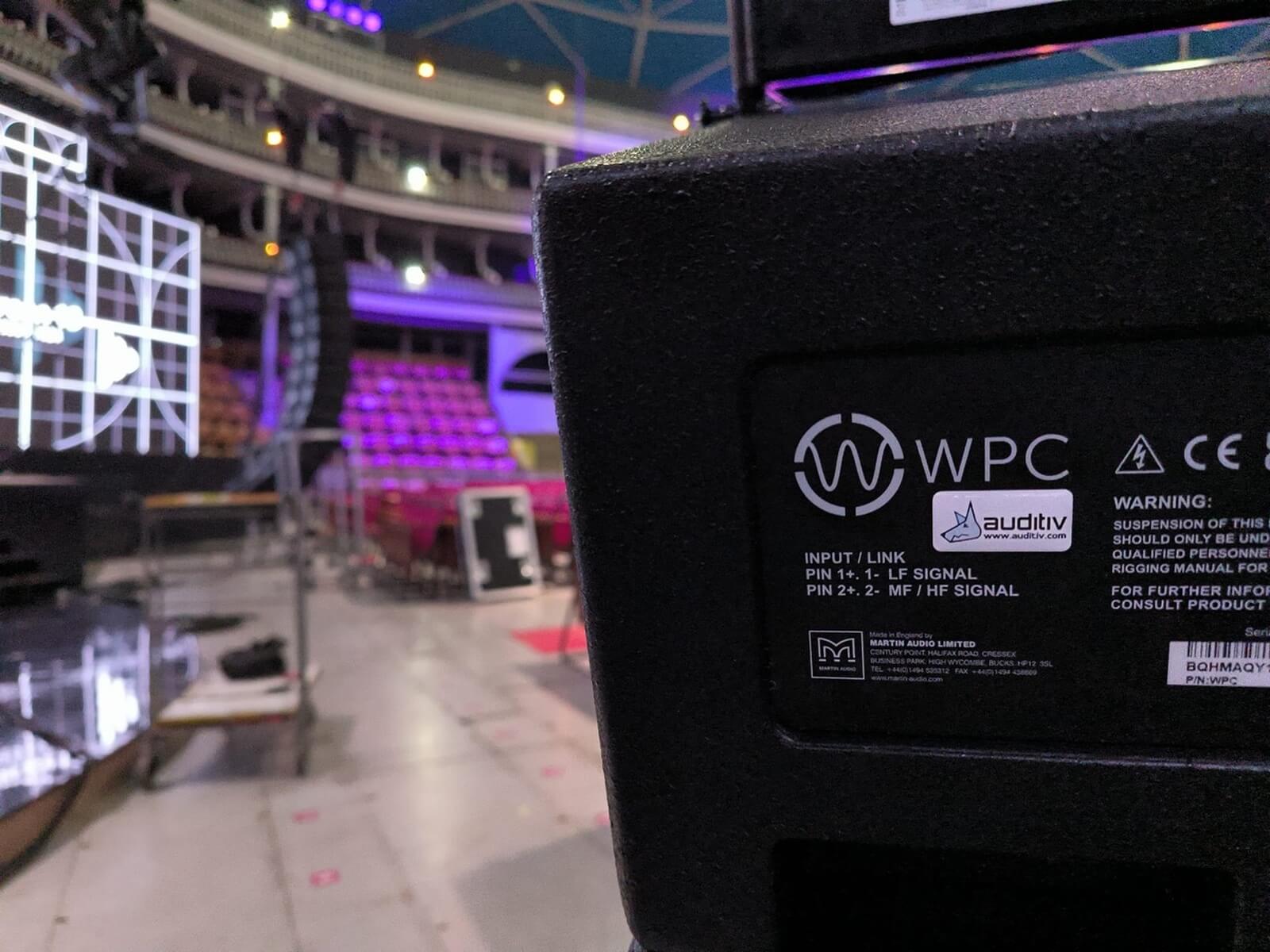
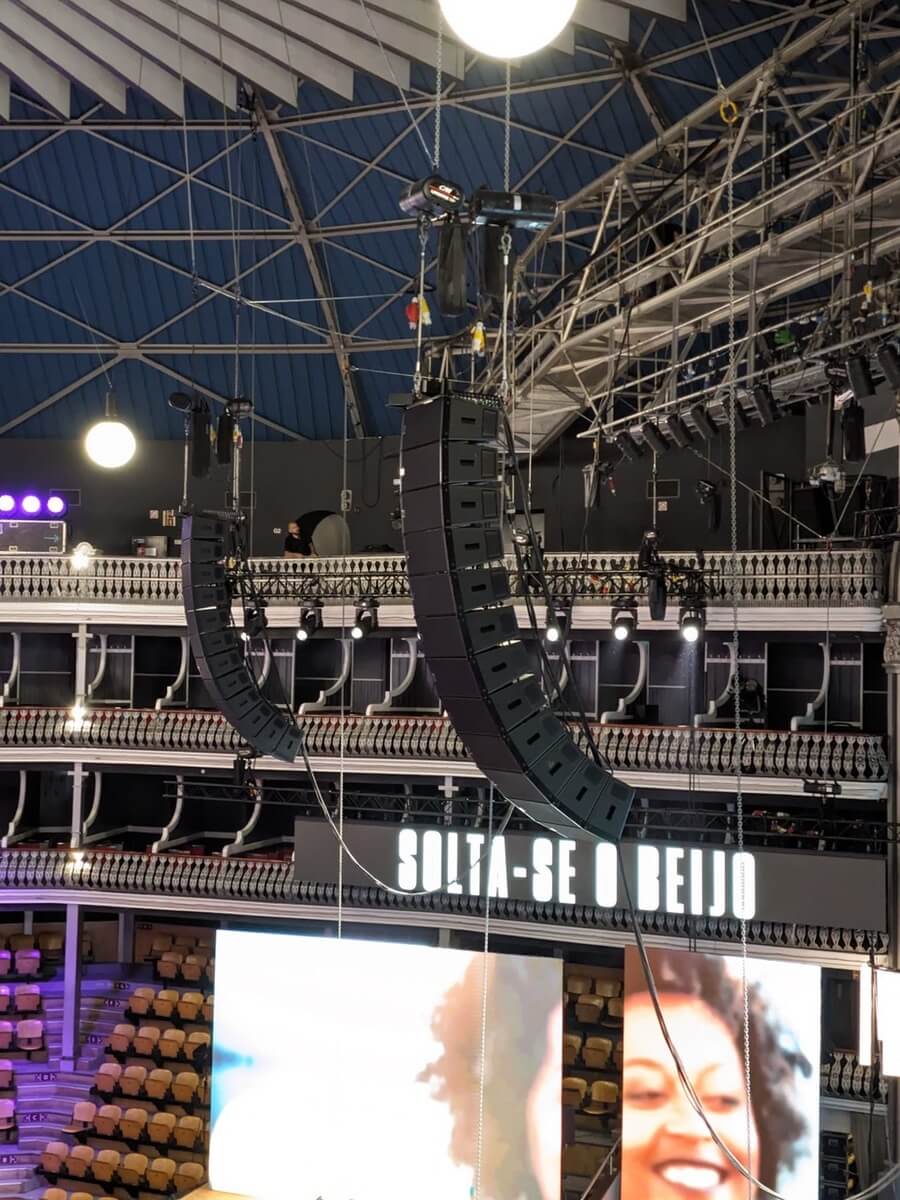
The company recently returned to the 4,300-capacity Coliseu dos Recreios in Lisbon with a Martin Audio WPC line array, providing the auditorium sound for the first time at the 2024 edition.
According to Auditiv directors Daniel Bekerman and João Escada, who also served as the event’s technical directors, the decision to deploy this advanced scalable PA was largely driven by a desire for innovation. They recognised that this solution would adapt to the space, be visually unobtrusive, provide improved coverage and adhere to the venue’s significant weight limitations.
“The WPC met this demanding challenge in every way possible.”
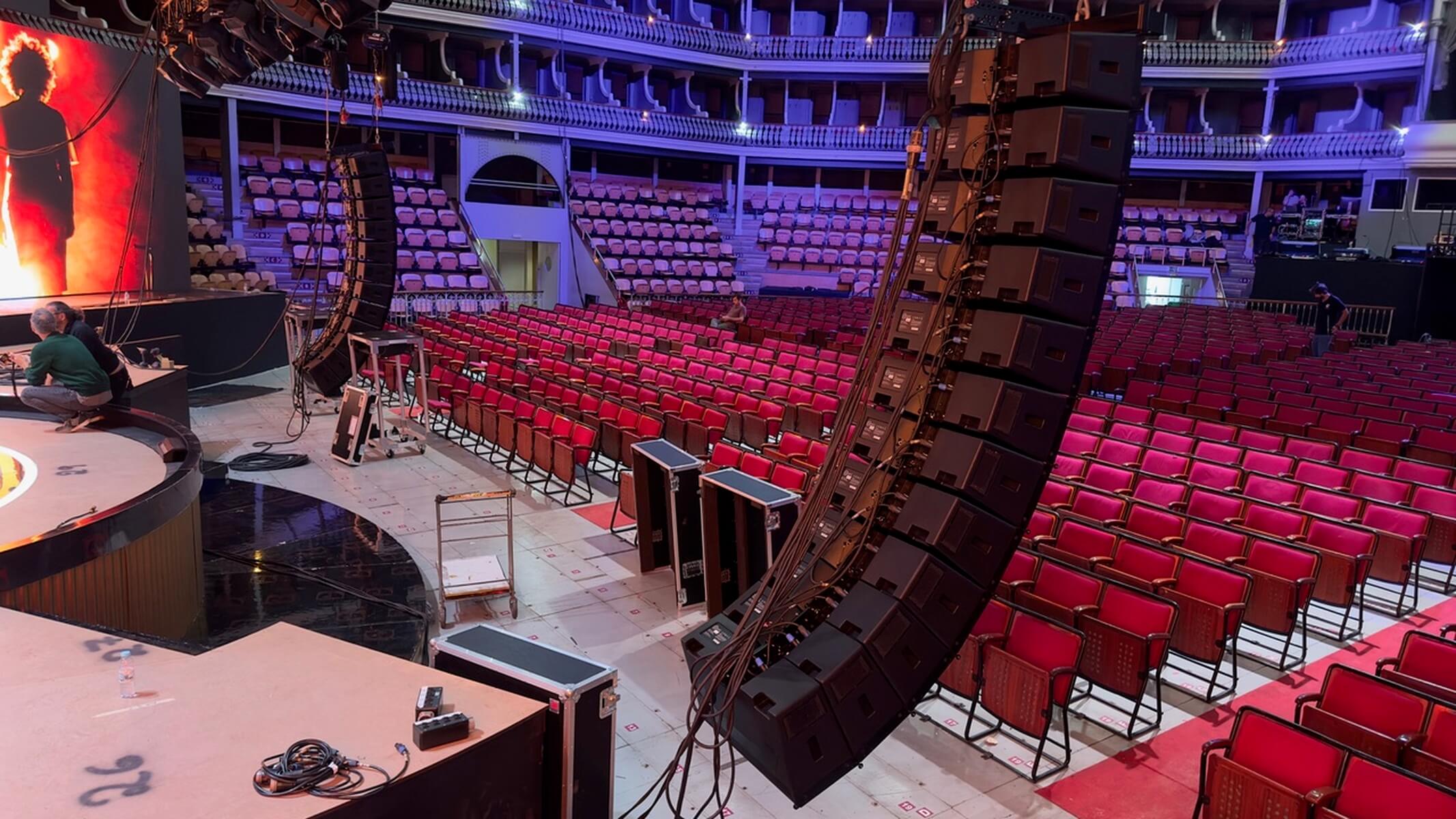
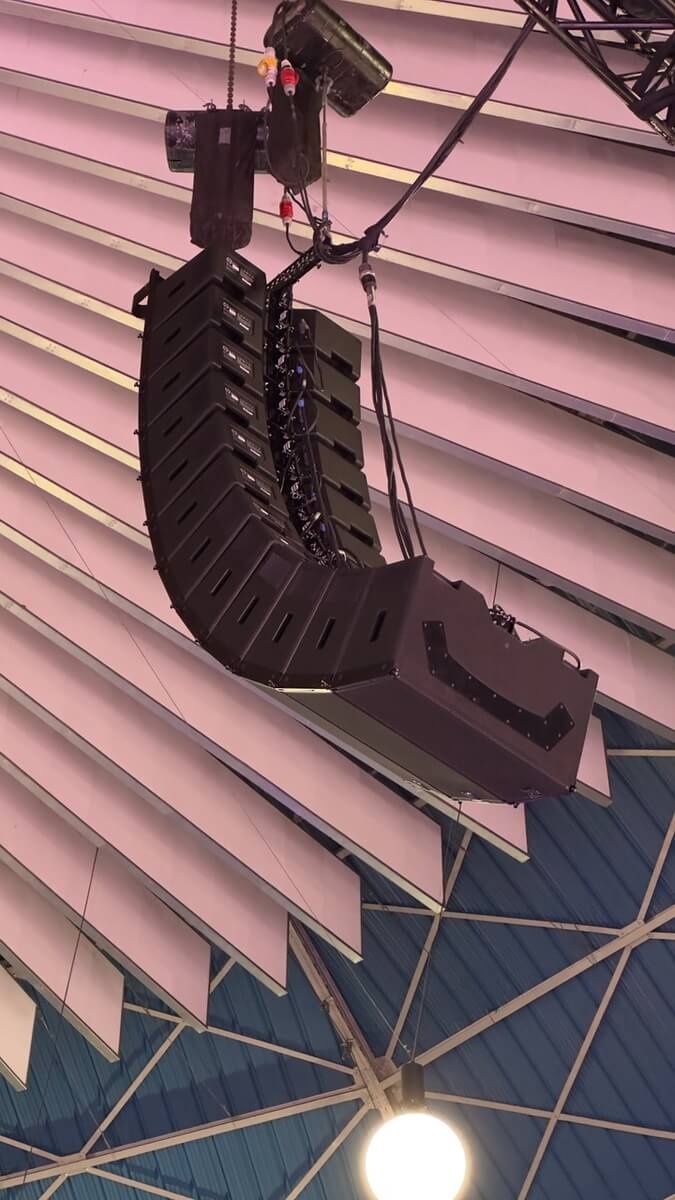
Two hangs of 12 WPC speakers were deployed—powered by Martin Audio iKON amplifiers, in 2-box resolution. Low-frequency extension was provided by SX218B, with Blackline X12 handling near-fill and outfill coverage, as well as stage sidefills. LE1200 wedge monitors completed the setup in a 100% Martin Audio deployment.
To ensure fully optimised sound, Auditiv utilised Martin Audio’s DISPLAY2 predictive software, VU-Net for control and SMAART for integrating the front fills, outfills and subs with the main system. System tech Isaac Bugalho was tasked with bringing the best out of the WPC. He was joined at FOH by Tiago Mendes, while Guilherme Vales managed the monitors.
Auditiv also handled the broadcast mix, sending splits via an Optocore/DiGiCo fibre loop.
The event was hosted by Clara de Sousa, one of Portugal’s leading journalists and TV presenters, with each award presented by different guests. The event production company was SIC – Sociedade Independente de Televisão. The evening’s content comprised a mix of various award presentations and live music, including a resident classical orchestra.
Summing up the event, Daniel Bekerman said he was “100% happy” with the Martin Audio performance. “Although we were very satisfied with the system used in previous years, the use of WPC brought improvements, mainly in terms of coverage uniformity.
“With two balconies and a VIP audience, including TV station representatives, the venue is very challenging, and the audience very demanding. With WPC, we were able to use more speakers, achieve better vertical dispersion, and maintain a wider 100° horizontal dispersion. All this was accomplished with less flown weight (the venue has tight limits), a reduced footprint (always important on a TV show), and a simpler, faster rigging setup, making coordination with video, scenery and lighting crews easier.
“The WPC met this demanding challenge in every way possible.”
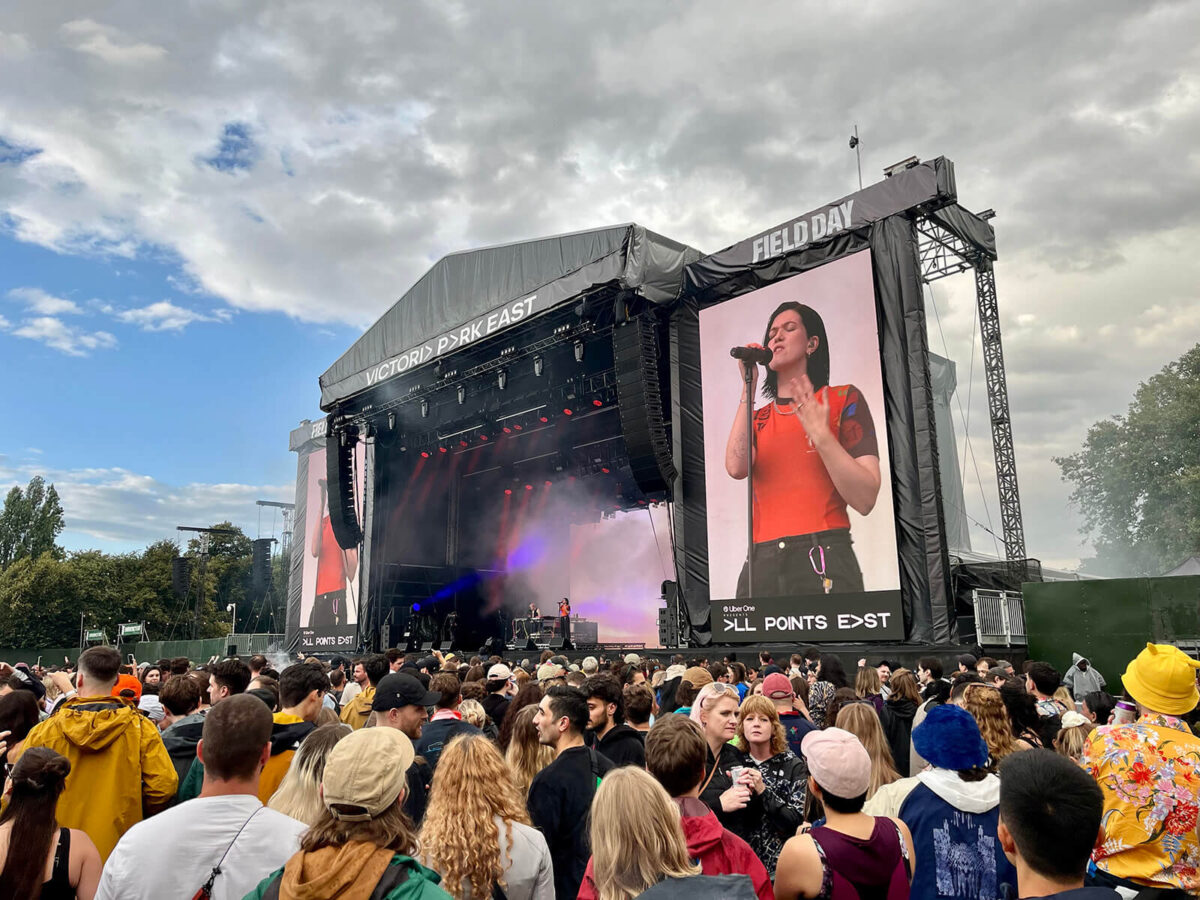
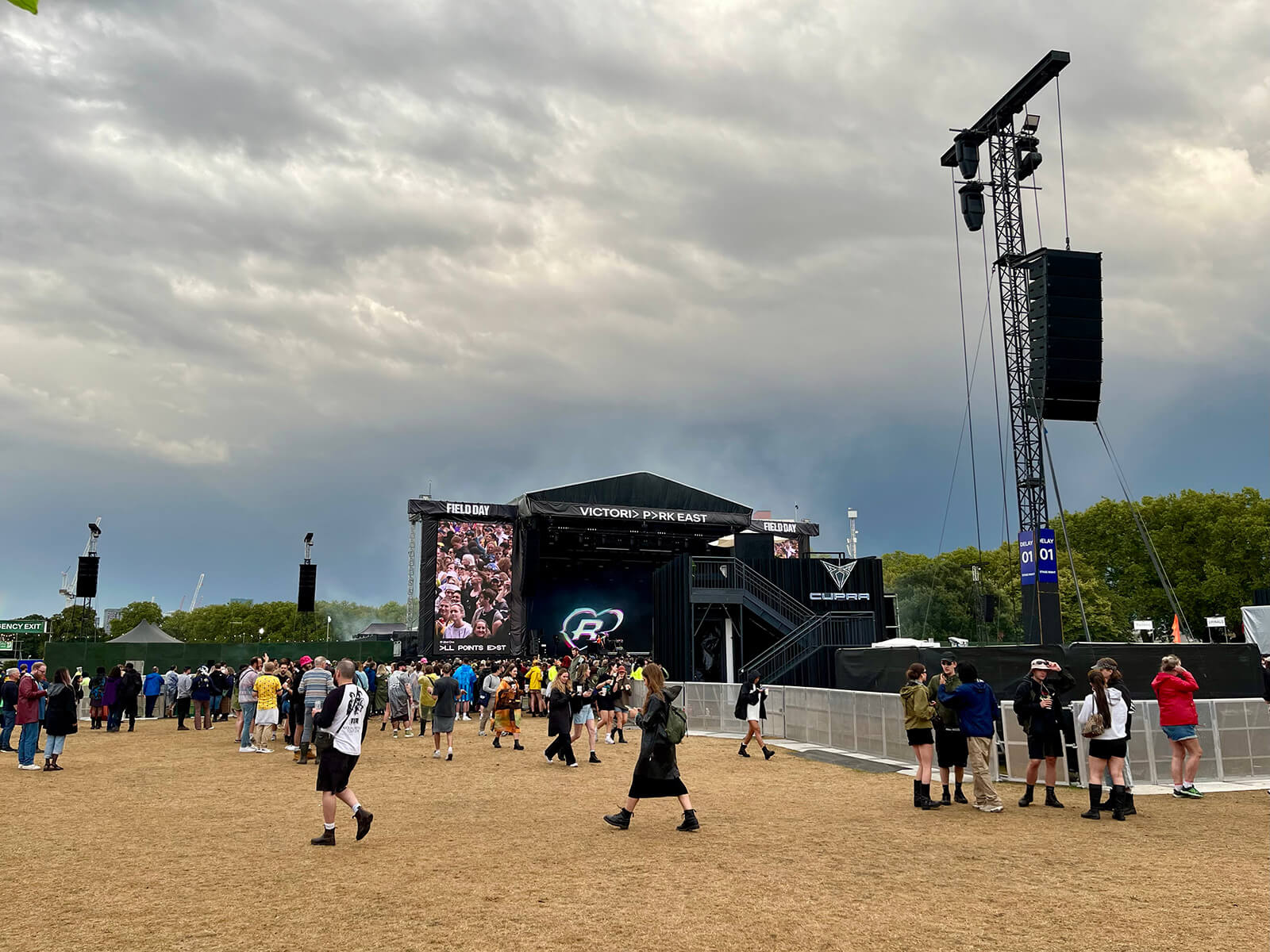
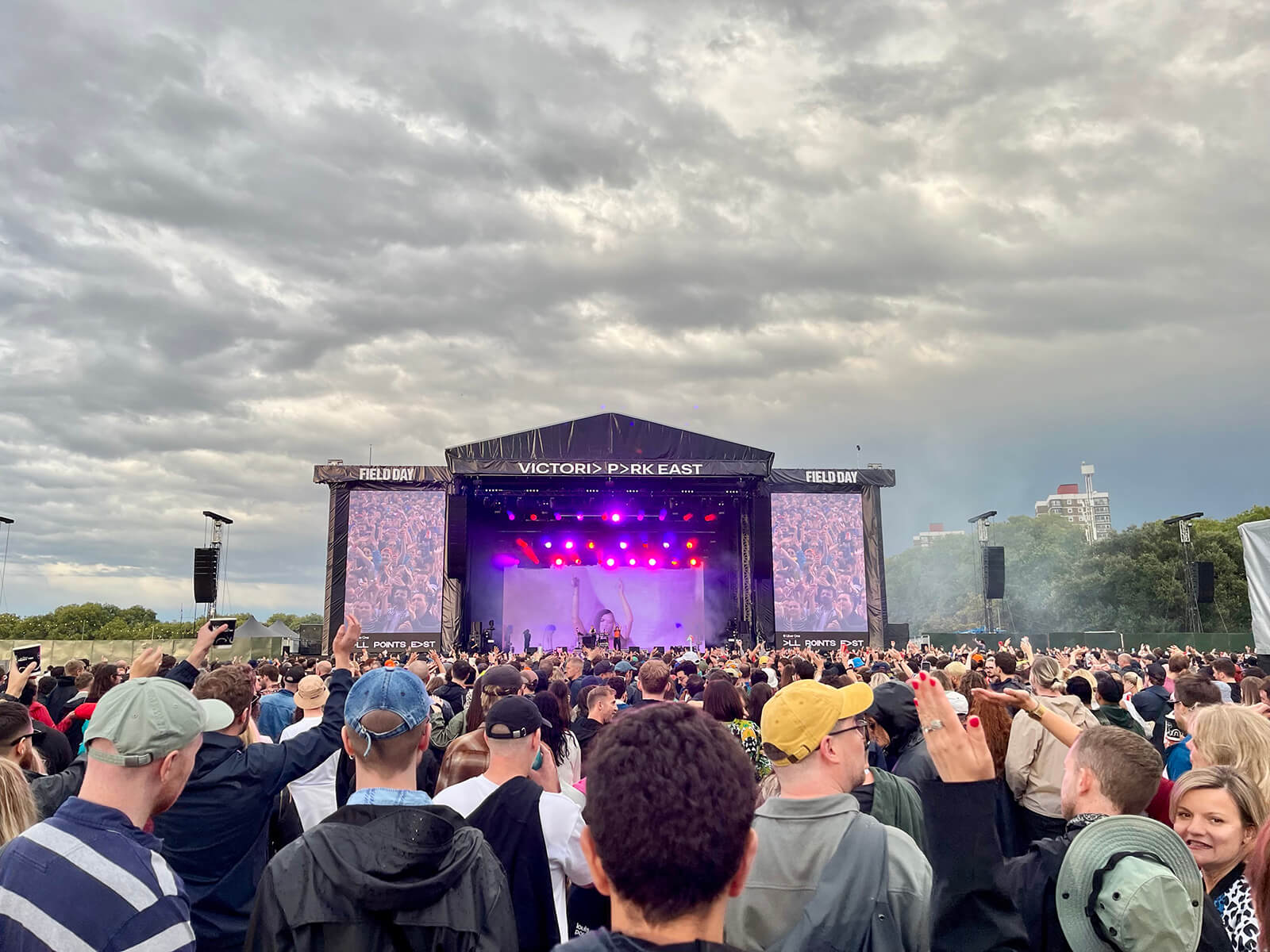
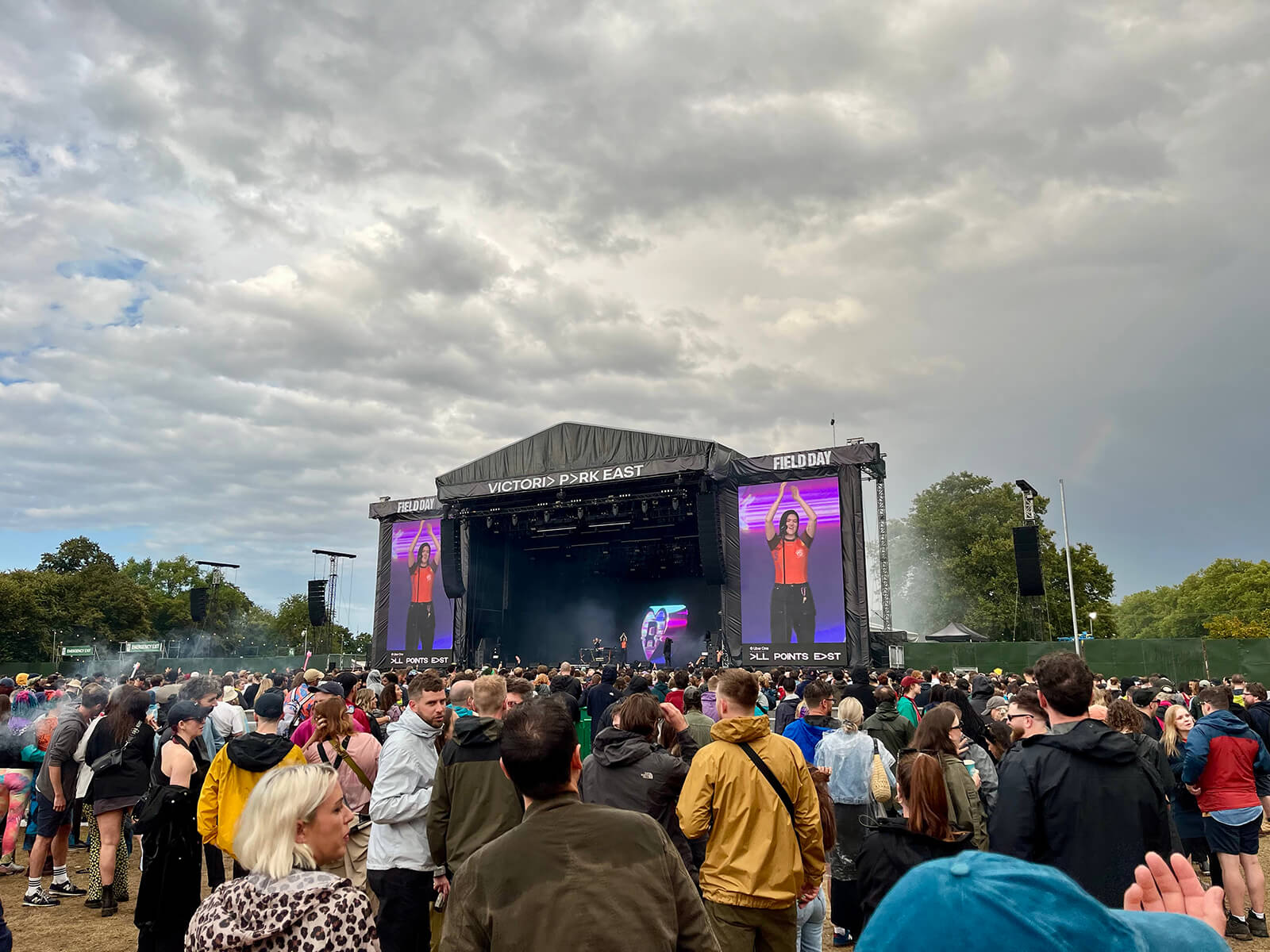
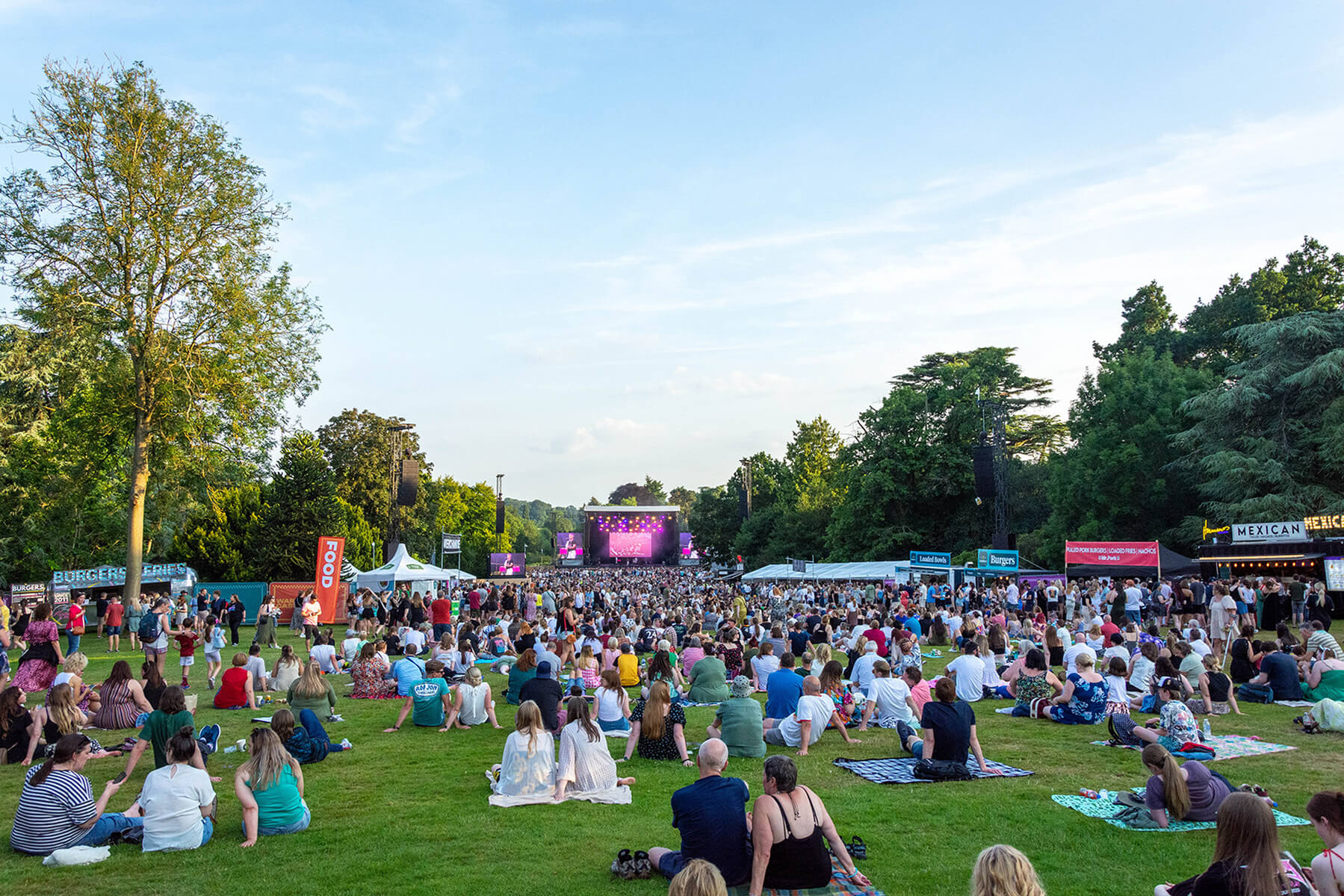
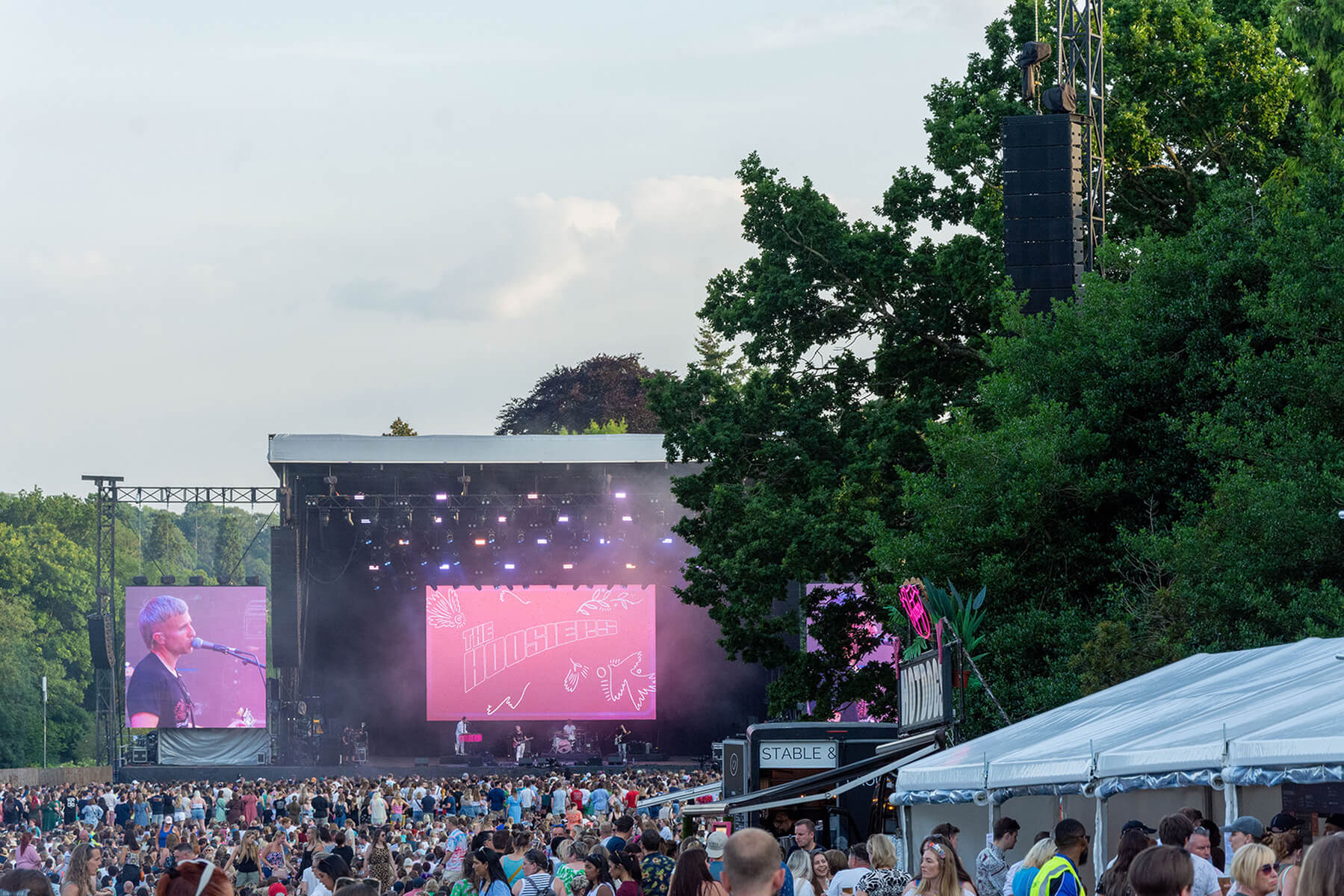
UK: Situated in London’s East End, Victoria Park has been a popular festival venue for many years—but it has also traditionally been one riddled with challenges for incoming sound reinforcement teams.
One person who has worked there many times is Solotech Senior Account Manager, Martin Connolly. He has generally specified Martin Audio’s MLA multicellular array for its unique control ability, keeping the sound firmly focused onsite, with minimum bleed into the neighbourhood.
In recent years Victoria Park has played host to the popular All Points East [APE], promoted by AEG Live, which runs over two weekends. Here Solotech team up with LS Events and production manager, Mark Ward (Proper Productions) whom they also work with at British Summertime, Hyde Park.
However, it has become increasingly difficult for production teams to achieve the required SPL in front of stage, sending all parties back to the drawing board for a ‘root and branch’ reappraisal.
This year LS Events responded by demarcating the East Stage listening area—effectively the sound field—with flags, inside which their aim was to deliver a uniform sound, evenly distributed between 98db(A)-100dB(A) LaEQ15 at FOH, and no more than 75dB(A) LaEQ15 offsite at the nearest measurement point. They recognised that for a bill heavily tilted towards indie and electronic (ranging from Kaytranda to LCD Soundsystem) it needed to remain consistently ‘banging’—all the way to the delay points, set some 150 metres back.
Thus Solotech’s Robin Conway set about revising the existing PA design to meet that challenge.
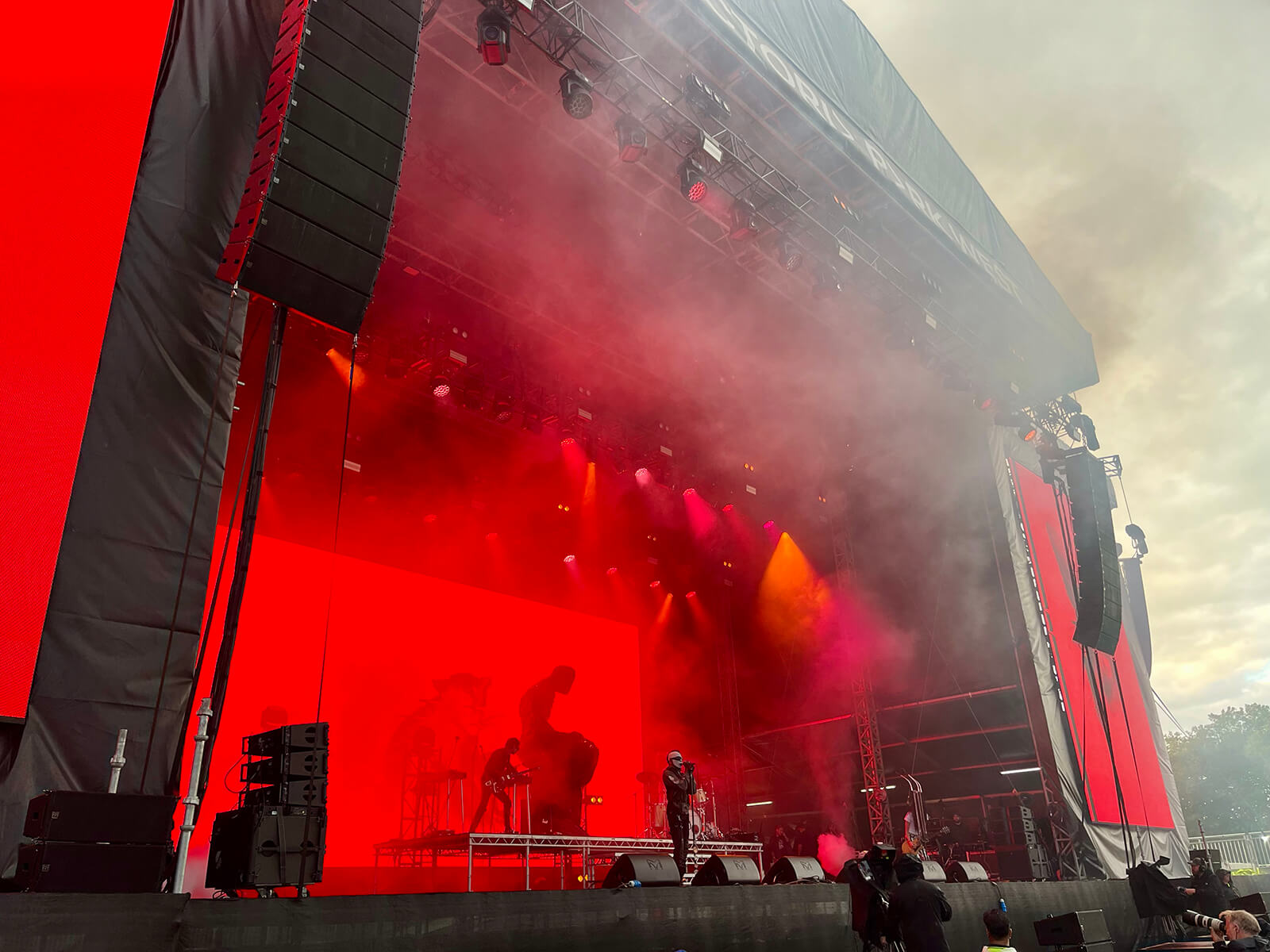
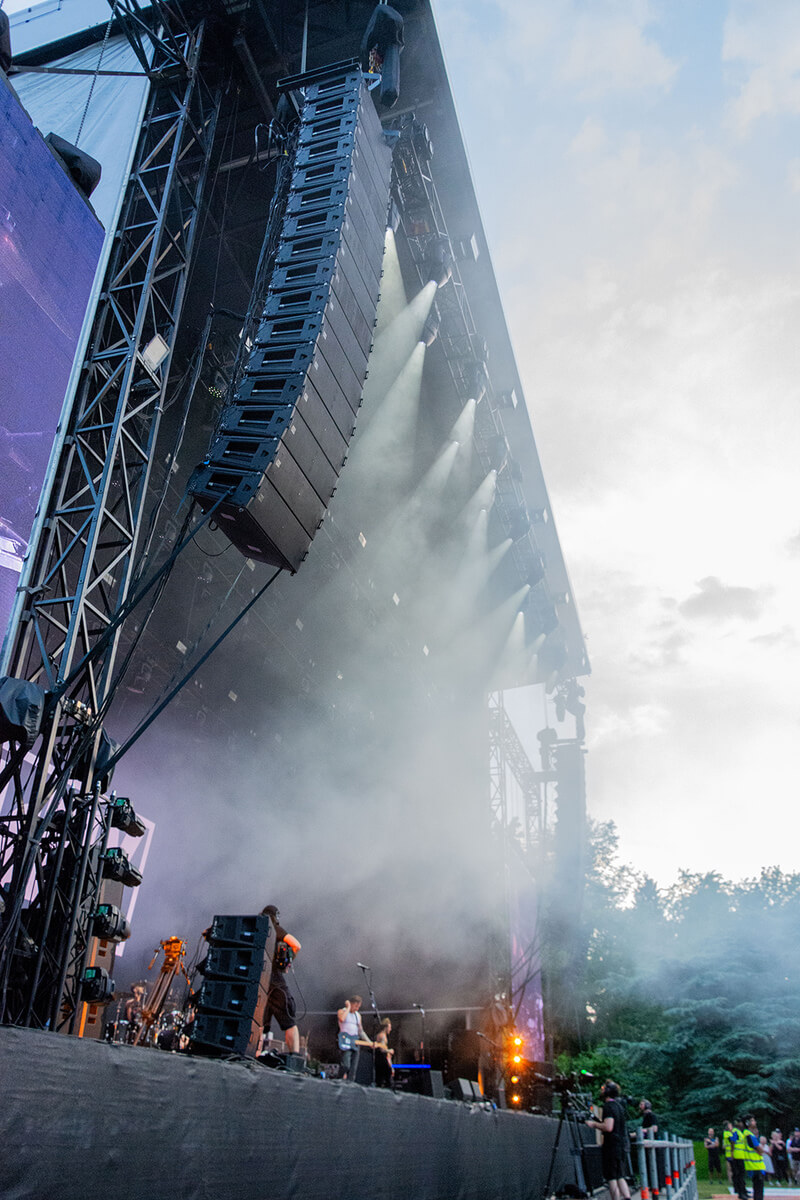
With six main hangs on East Stage, he upgraded the infill drops from MLA Compact to full MLA (eight MLA plus an MLD Downfill), and had them flown rather than groundstacked. The main hangs again comprised 13 MLA and an MLD Downfill, and outfills six MLA (and an MLD) flown. Subwoofers consisted of 20 MLX in a broadside cardioid array, arced across the front (with seven of these rear facing), while eight Martin Audio XD12 provided the nearfills. The outer hangs, in particular, had been required to bolster the sound on house right.
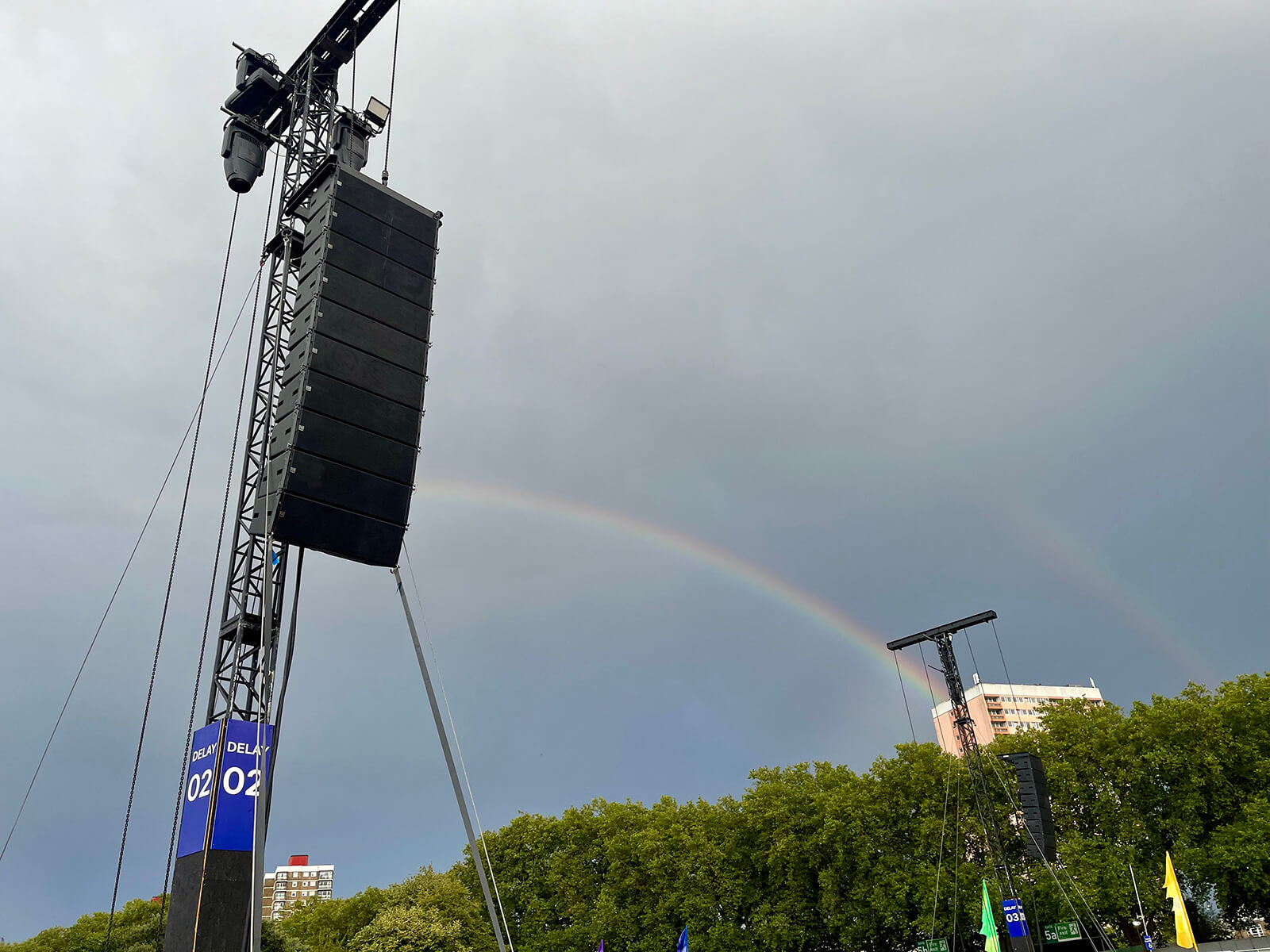
But arguably the bigger achievement was to introduce Martin Audio’s flagship WPL into three of the five delay positions (in respective blocks of 8, 10 and 8 elements) which had previously been occupied by MLA Compact. Spanning the other two rear field delays Solotech deployed 20 MLA Compact (10-a-side), bolstered with three MLX subwoofers on each tower. Reasoned Martin Connolly, “Because WPL is physically a bigger box than the MLA-C, giving us a longer hang, it afforded us greater controllability on the low end.”
As consultant and former Martin Audio Engineering Director Jason Baird put it, “The DISPLAY optimisations for these arrays were configured with an SPL profile of +2 at the front and 0dB (c/w FOH) at the coverage stop position. This was to maintain the same SPL level as at FOH, right up to the handover to delay ring 1. The tighter horizontal dispersion of WPL, and improved low mid pattern control of the larger product, were hugely beneficial. The delays yielded incredibly consistent sound levels, not only front to back but side to side too. It almost goes without saying that the DISPLAY files made full use of the Hard Avoid feature too.”
For the headliners Solotech ran uniformly at 99dBA on Friday, 100dBA on Saturday and 98dBA Sunday, while working within offsite levels. To verify the onsite measurements, and establish proof of concept, AEG had introduced audio consultants, Electric Star.
How would this impact offsite? As a precaution Solotech had drafted in Jason Baird to act as audio coordinator between East Stage system tech Joseph Pierce and the event’s regular acoustic consultants Vanguardia, who were responsible for monitoring offsite sound.
The most sensitive (and nearest) of the measurement points was Waterside (75m to house right of stage). “With a normal PA side hang at 45° to the main PA it’s going right down the throat of that measurement microphone,” notes Connolly. “Jason would look at the data and for example decide to pull one frequency down by 2dB, or notch out sub frequencies on an act-by act basis, to stay within the off limits rather than turn the whole thing down by 6dB in a knee jerk reaction.” With some judicious tilting and tweaks they were able to overcome this.
Solotech UK equipped two further stages with Martin Audio, implementing the same designs as last year. On West Stage, where Josh Bruty was system tech, they fielded main hangs: of 12 x WPL, side hangs of12 x WPC; front fills of 8 x WPS and subs comprising 11 x SXHF218. There were two delay positions, each with six WPC.
Finally they equipped L’Oreal Stage (rebranded last year from BMW Stage) with 10 x WPS; 4 x DD12 and 4 x SX218 subs.
This overall solution provided all concerned with a feeling of ‘mission accomplished’ as consistent sound levels were maintained. “We achieved great results and have had nothing but positive feedback from production,” declared Martin Connolly. He said he hoped this universal approbation would finally allay misguided concerns about insufficient levels. “Now we’ve increased by 1-2dB that argument has been kicked firmly into touch. He added that there was no reason to consider changing the main PA system. “MLA may be well over a decade old, but it still really delivers.
“Victoria Park is more difficult to work than any other site we do, including Finsbury Park, and we are delighted to have pulled this off.”
And Jason Baird agreed. Stating that there is no ‘one-size-fits-all’ approach to festival PA design he simply explained: “Any festival site is a balancing act and for APE we found that balancing point.”
Other key personnel on duty included (East Stage): Xavier d’Arifat (FOH engineer); Jonny Buck,Alastair Hellard (monitor engineers). West Stage: Will Hall (FOH engineer); Isabella Di Biase and Kieran Niemand (monitors). Finally, on L’Oreal Stage, Jason Barton was the sound engineer.
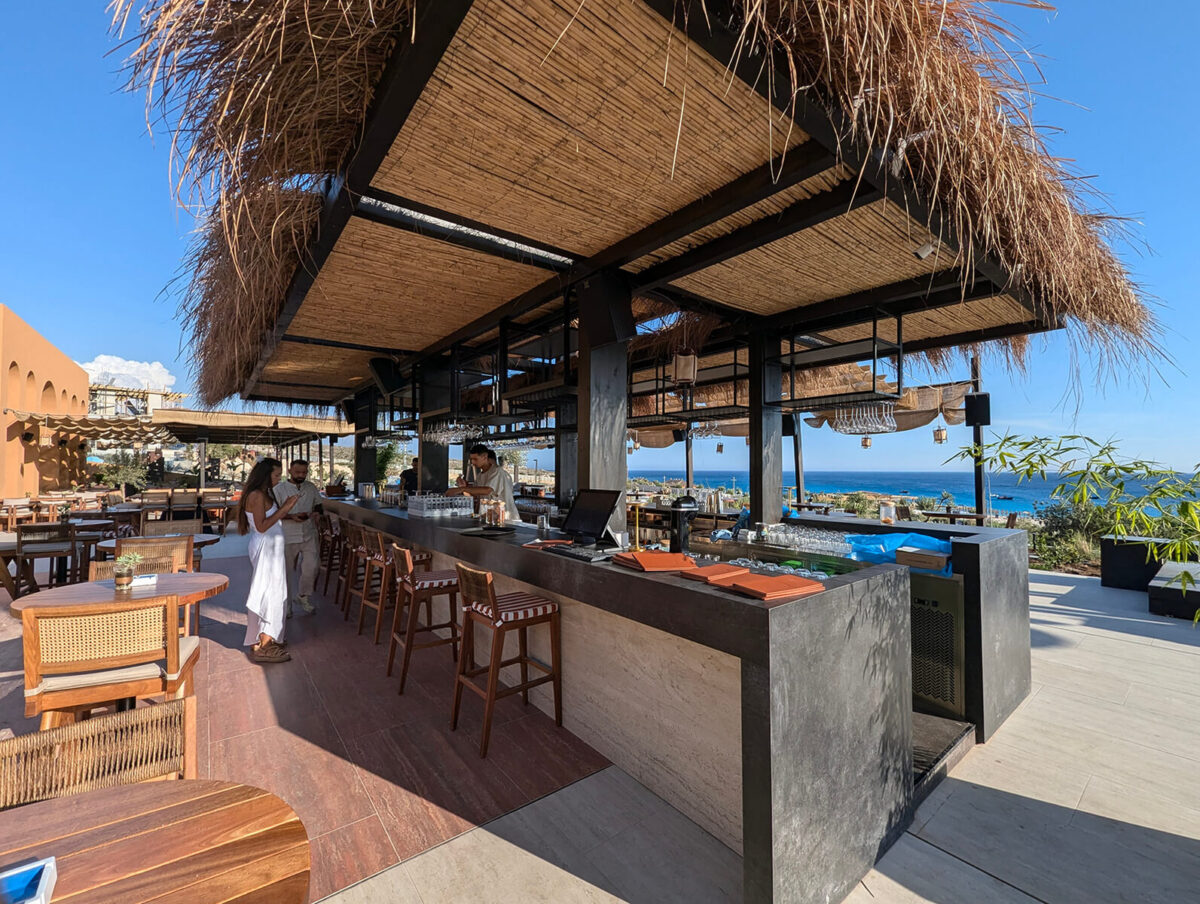
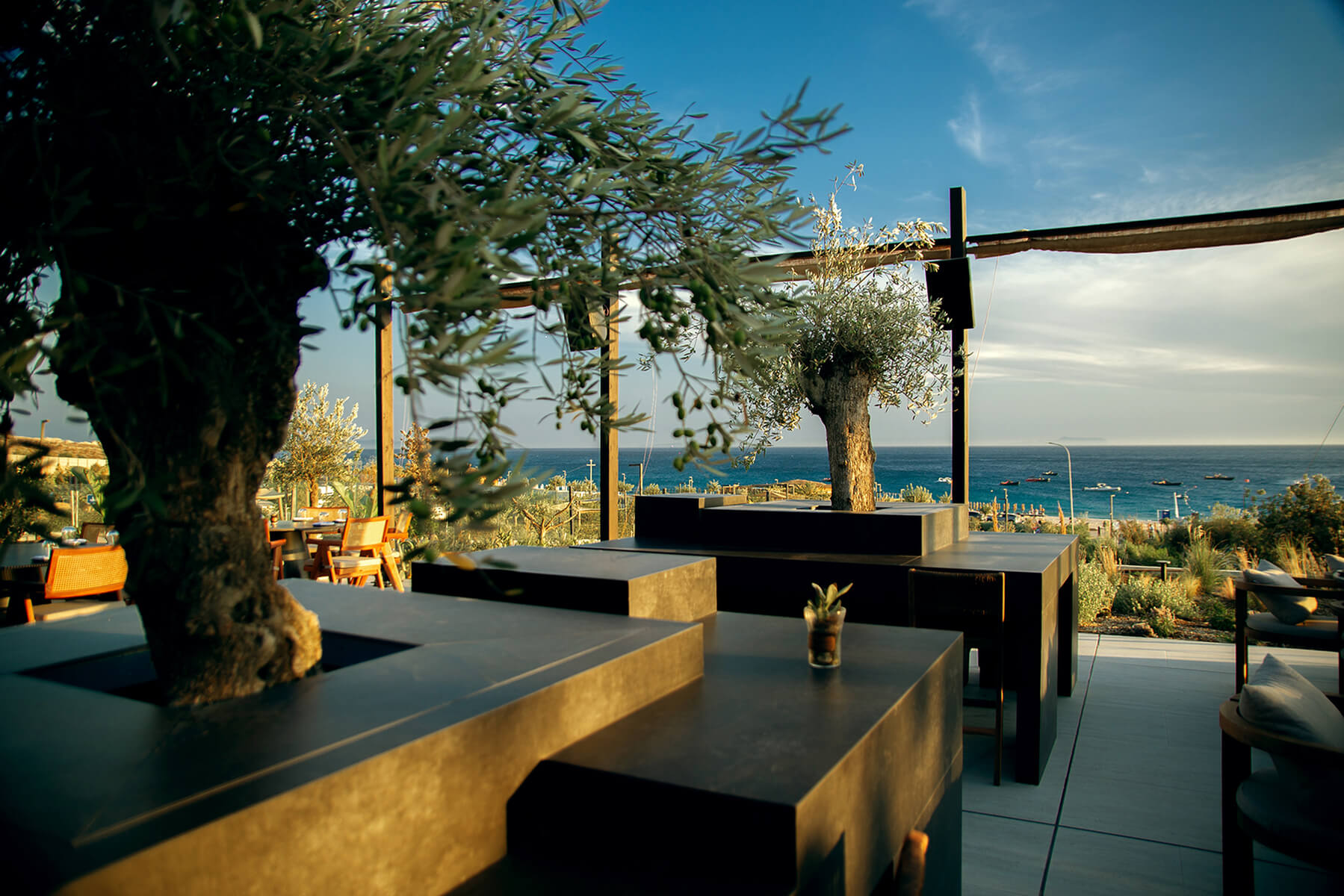
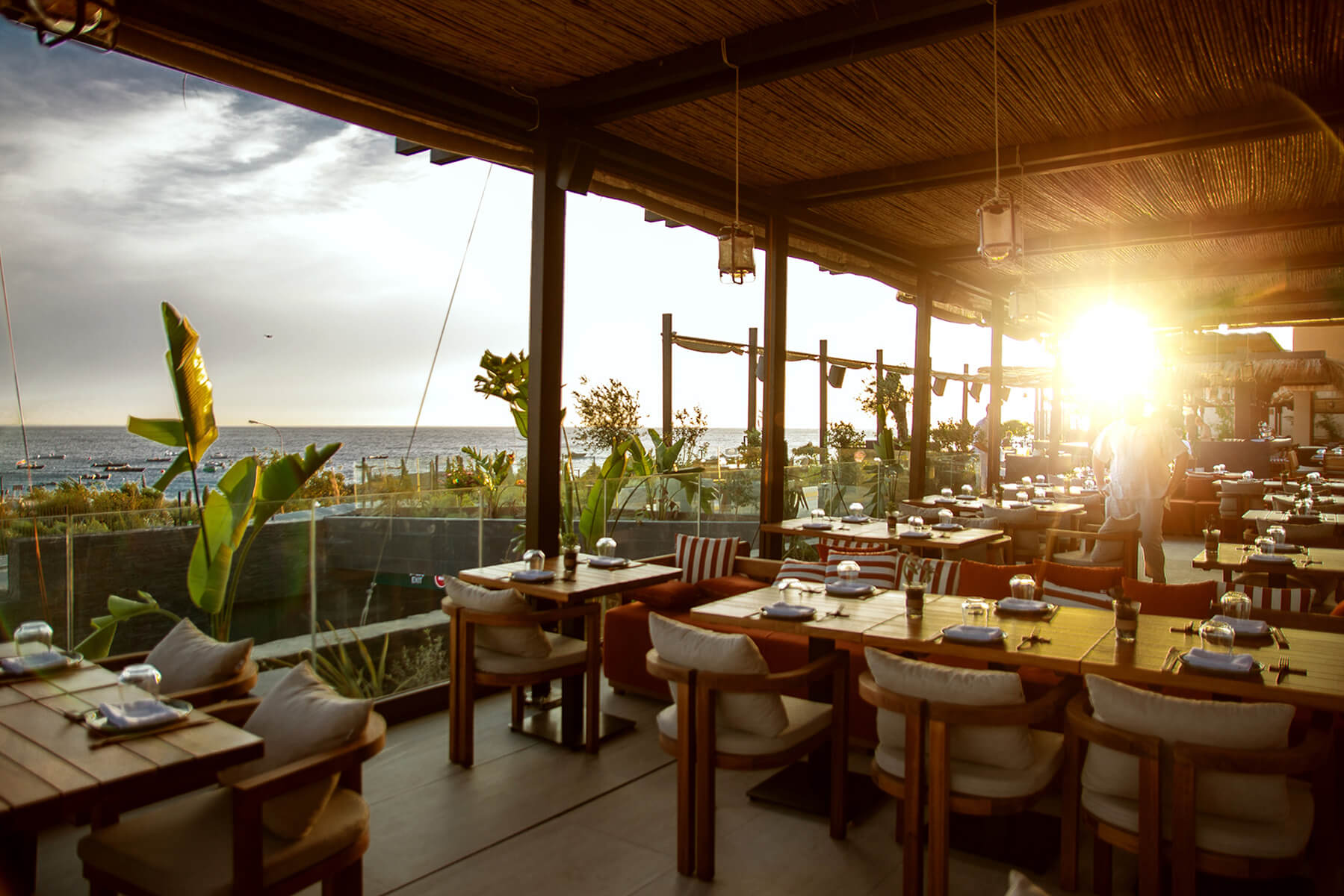
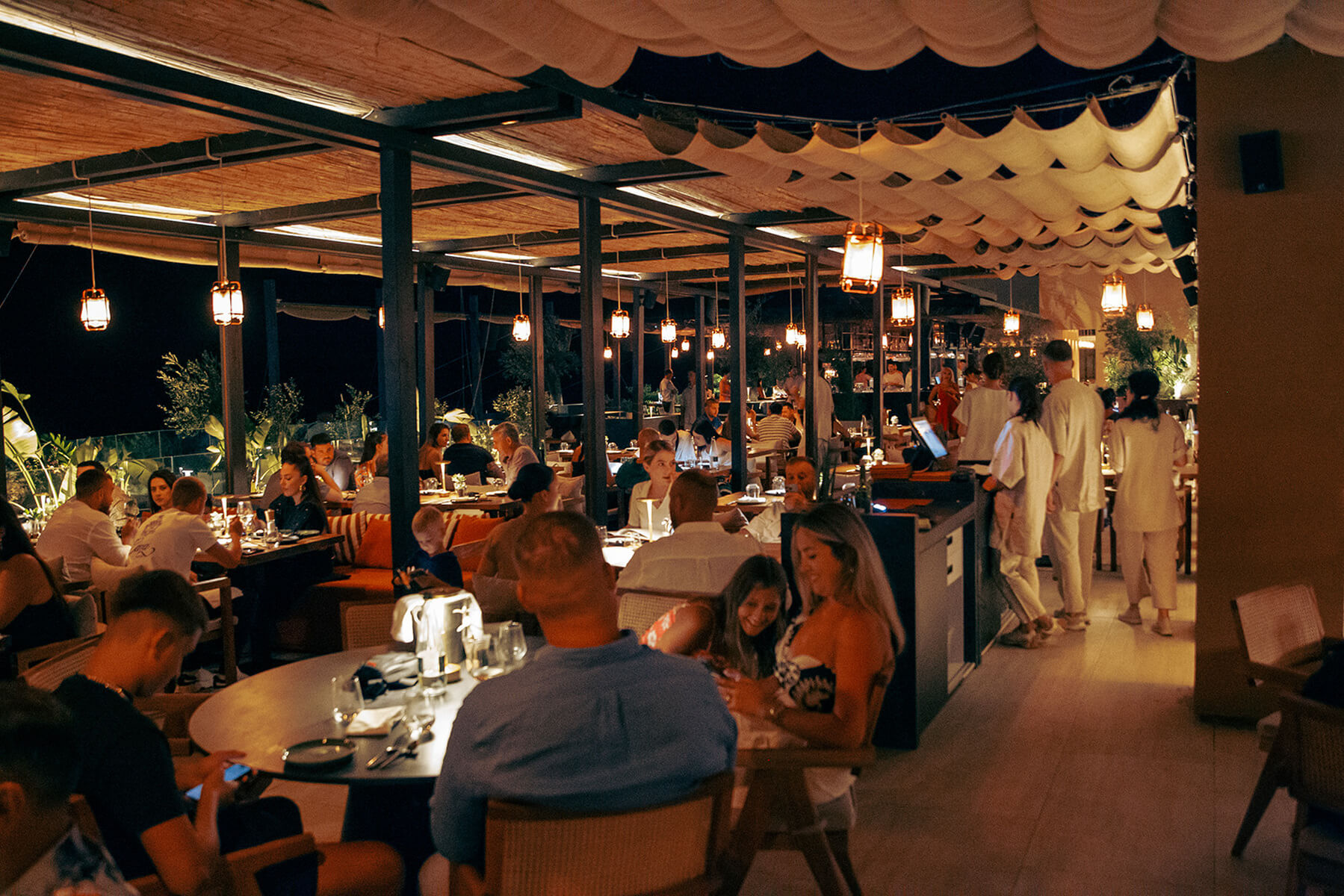
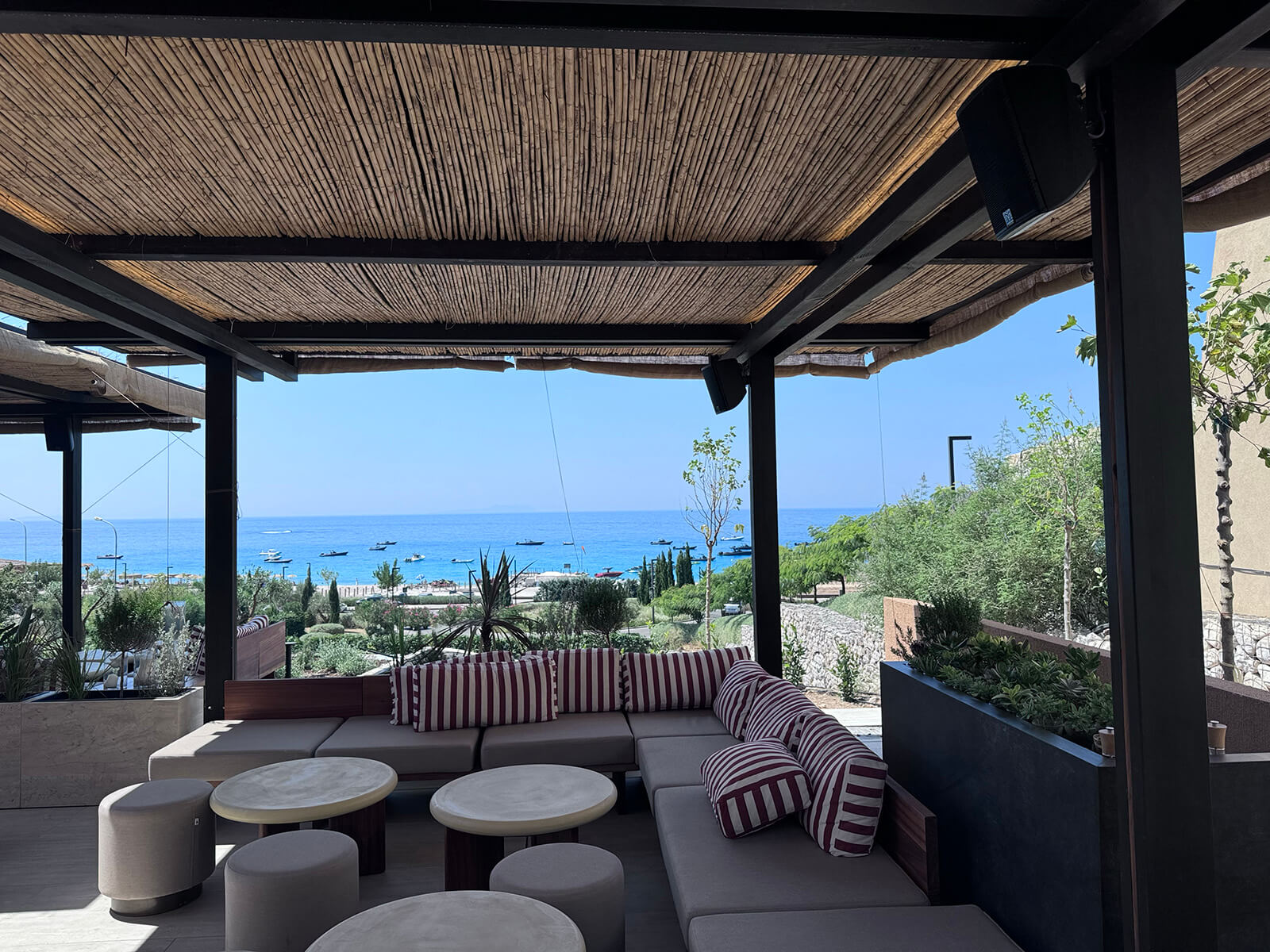
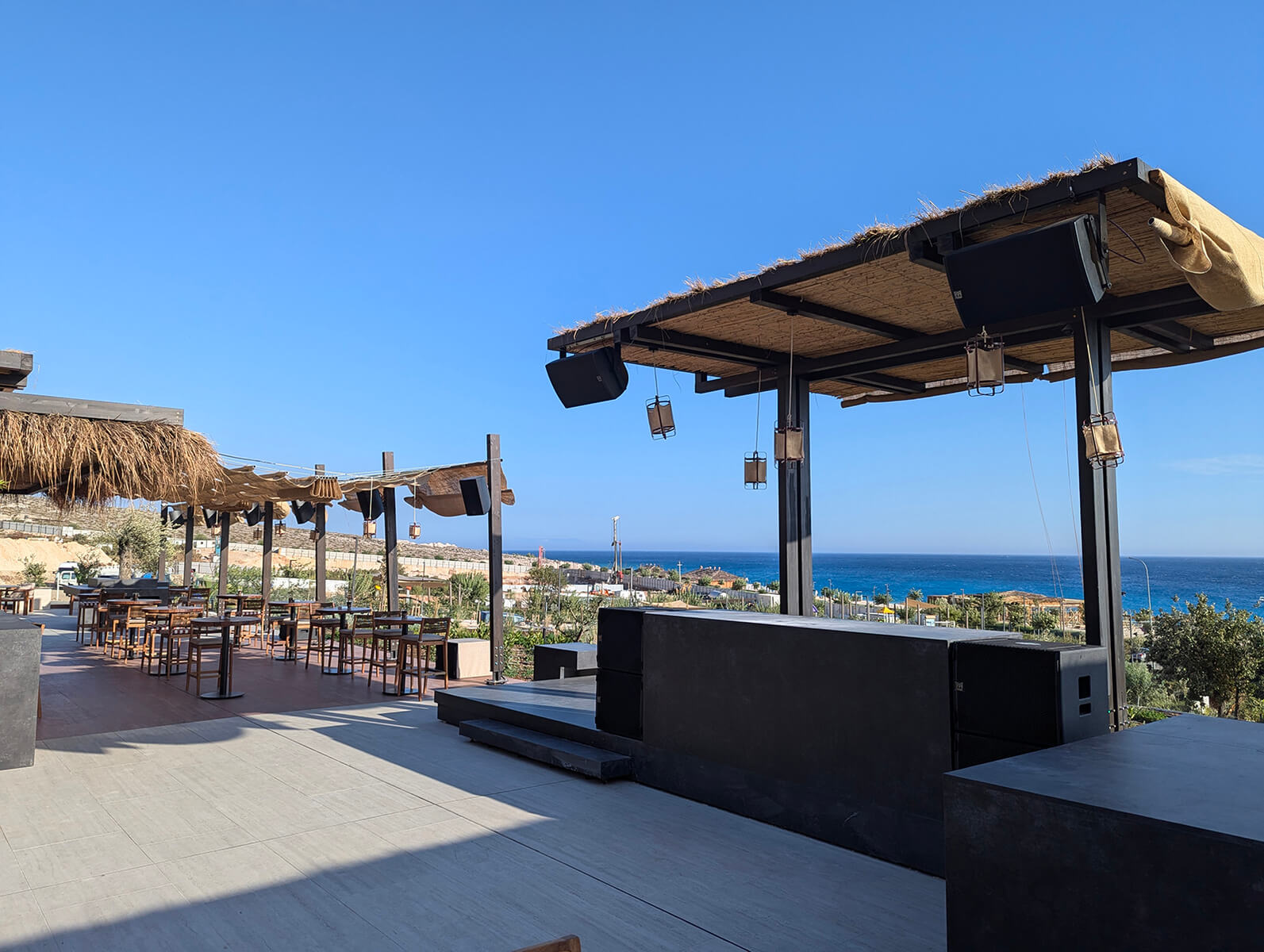
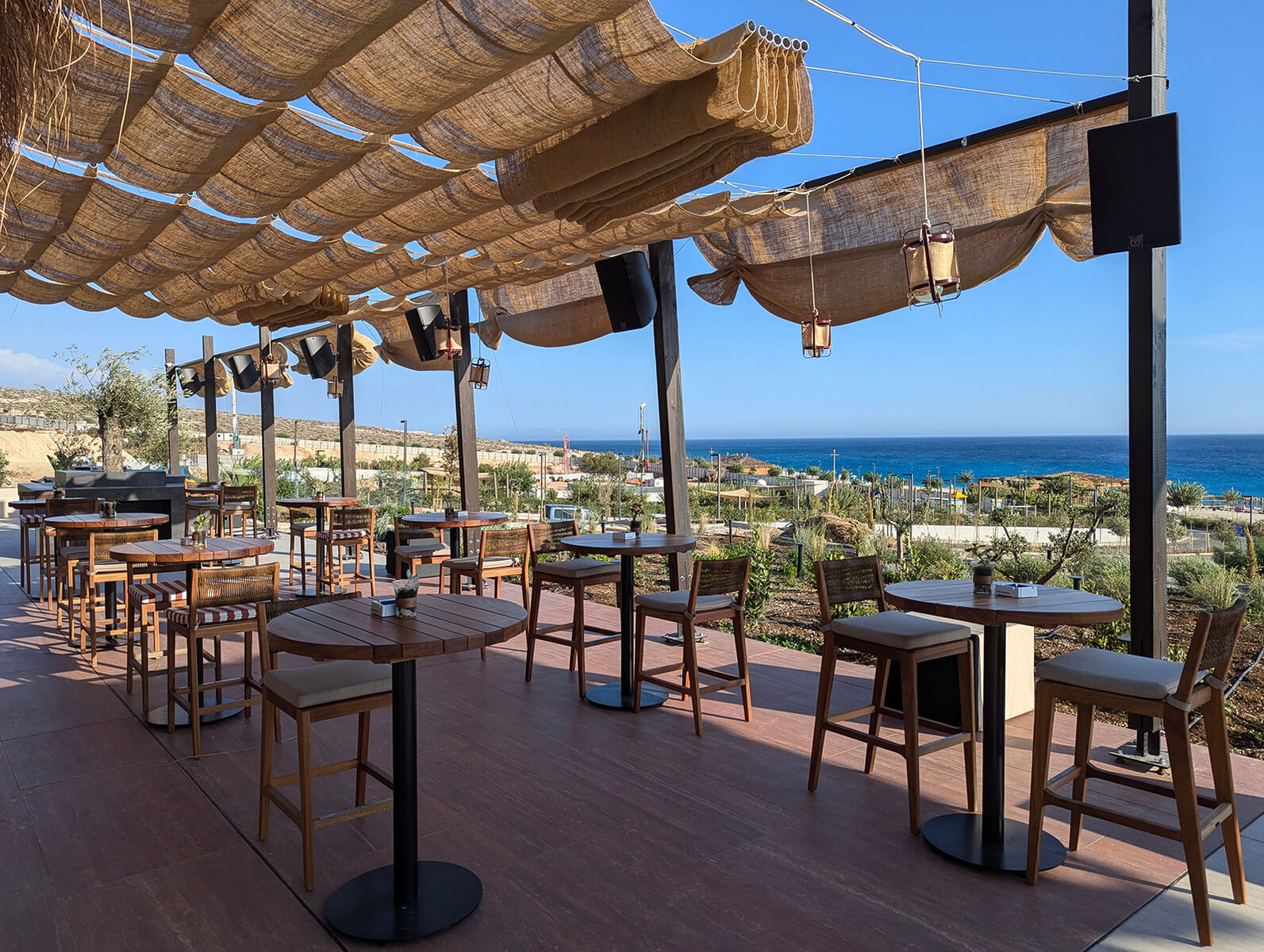
ALBANIA: Green Coast is a luxury tourist retreat located in the Albanian resort of Palasë. Known as the Albanian Riviera, and overlooking the Ionian Sea, it is also a popular recreational hub, with a number of bars and restaurants.
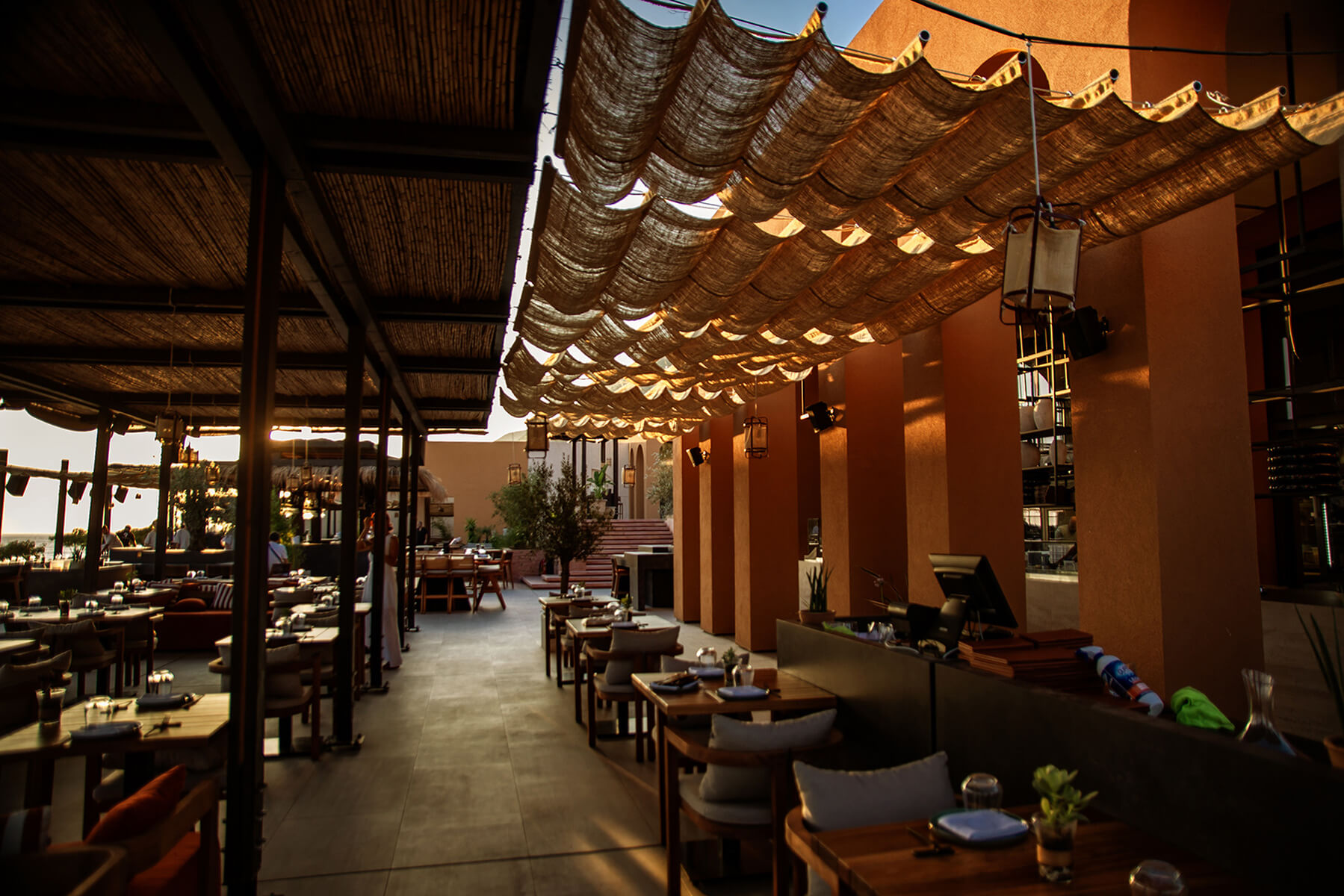
One of these is the latest SALT, run by experienced restaurateurs, Revo Hospitality Group (RHG) which specialises in Mediterranean cuisine, seafood and sushi. Described as ae “one-stop shop for food and beverage experiences, providing something for everyone from daytime, dining, nightlife and events” it recently turned to Martin Audio’s local distribution partner, Prosound for a sound system installation. This was after they had successfully carried out other work for the Group (including SALT restaurants, and Lift Steak & Rooftop Bar.
Having used the Prosound / Martin Audio combination successfully on previous installations RHG had no need to change a winning formula. Tasked with reinforcing a wide range of music sources—including DJs and live bands (when the venue reverts to a night time / club atmosphere)—Prosound’s Endrit Veleshnja recommended a CDD solution.
CDD is Martin Audio’s most popular range, particularly for this type of venue. Drawing on Coaxial Differential Dispersion technology (which gives CDD its name) the system is versatile and easy to install, with flexible mounting options.
Prosound divided the single-storey venue into five different sound zones, with three different sound sources that can be combined. They specified a combination of CDD15, CDD10, CDD8, CDD6, for use both inside and out on the terrace, powered by Martin Audio VIA amplifiers, with Martin Audio ADORN A55 infilling the peripheral areas.
In the main dance area these were complemented by several SX118 subwoofers, with SX112 and SX110 providing LF extension in the other zones, routed through a third-party processor.
Thus the operators can once again reflect on a successful installation that meets all requirements over a trading pattern that runs from lunchtime right through until 3am.
Martin Audio, a global leader in professional audio, is proud to announce the appointment of Simon Honywill as its new Market Development Manager for Live Sound, Production, and Immersive Audio Markets. With an extensive career spanning over two decades in sound engineering, Simon’s transition into this strategic role is set to propel Martin Audio into new markets while further solidifying its leadership in live sound and immersive audio technology.
Honywill’s appointment follows a long and successful association with Martin Audio. His contributions to sound engineering across major global events, particularly in the UK festival scene, have earned him a stellar reputation. “I’m utterly thrilled about this new role,” he said. “After years of working as a sound engineer, I’ve been looking for a way to bring my expertise to a broader market and make a bigger impact. This role with Martin Audio offers me exactly that opportunity. I’ve always admired the company’s innovation, and now I have the chance to be part of shaping its future.”
As Market Development Manager, Honywill will spearhead efforts to expand Martin Audio’s presence in the live sound and immersive audio markets. His new responsibilities will involve working globally, with a particular focus on Europe and the Middle East, fostering stronger relationships with both existing and prospective clients. His travels are set to begin with key industry events, including Pro Lab’s Open Day in Dubai and the LEaT.con trade fair in Hamburg.
Having been a vocal advocate for Martin Audio throughout his career, Honywill’s passion for high-quality sound has consistently aligned with the company’s commitment to audio excellence. “Martin Audio makes the best loudspeakers on the planet,” he confidently stated. “I’ve used every system under the sun over the years, and I keep returning to Martin Audio for its unmatched musicality and advanced technology. Our optimised systems are leagues ahead of the competition, and I’m excited to help the industry recognise that.”
I’m proud to be part of this new chapter.
In addition to his technical expertise, Honywill brings a deep understanding of the psychology of the industry, making him an ideal ambassador for Martin Audio. “Too often, people make decisions based on what others tell them, rather than experiencing products for themselves. I want to change that by encouraging more direct engagement with our systems, which I truly believe are the best on the market.”
One of the highlights of Honywill’s career is his long-standing involvement with theGlastonbury Festival. His deep connection with the event will continue in his new role, where he remains actively involved in sound design and implementation. “I’ll still be working with Glastonbury, particularly on Block 9, which could see some exciting changes in the near future,” he noted. “It’s a fantastic opportunity to integrate Martin Audio’s latest technologies into one of the world’s biggest festivals.”
Alongside his ongoing festival work, Honywill will continue to support major sound installations, helping Martin Audio maintain its dominance in the festival sound market. “I’ve spent years working on festival systems, including the Pyramid and West Holts stages at Glastonbury. These setups are already at the forefront of sound engineering, but I’m eager to push the boundaries even further, especially as new technologies become available.”
A key objective in his new role is to ensure Martin Audio’s products meet the highest standards of sound quality while addressing the practical needs of sound engineers and clients. “In the past, my feedback to R&D has been sporadic,” Honywill admitted. “Now, I’m looking forward to a more structured involvement in product development, taking new products into the field, testing them in real-world conditions, and providing invaluable feedback to the R&D team.”
Honywill’s industry insights and expertise will be instrumental in refining and enhancing Martin Audio’s product offerings. “I’ve always believed that the best audio products are those that emotionally connect with the audience. If I can help foster that emotional connection through superior sound quality, then I’ll know I’ve succeeded in this role.”
His appointment comes at a dynamic time for Martin Audio, as the company has made significant progress with the recent addition of other industry veterans to its leadership team. “There’s a lot of momentum within Martin Audio right now,” Honywill said. “With the product line-up being the strongest it’s ever been and people like Brad Berridge joining the team, it’s clear the company is heading in the right direction. I’m proud to be part of this new chapter.”
With his extensive experience, technical expertise, and dedication to sound quality, Simon Honywill is perfectly positioned to help Martin Audio expand its market share and deliver world-class audio systems for live and immersive experiences.
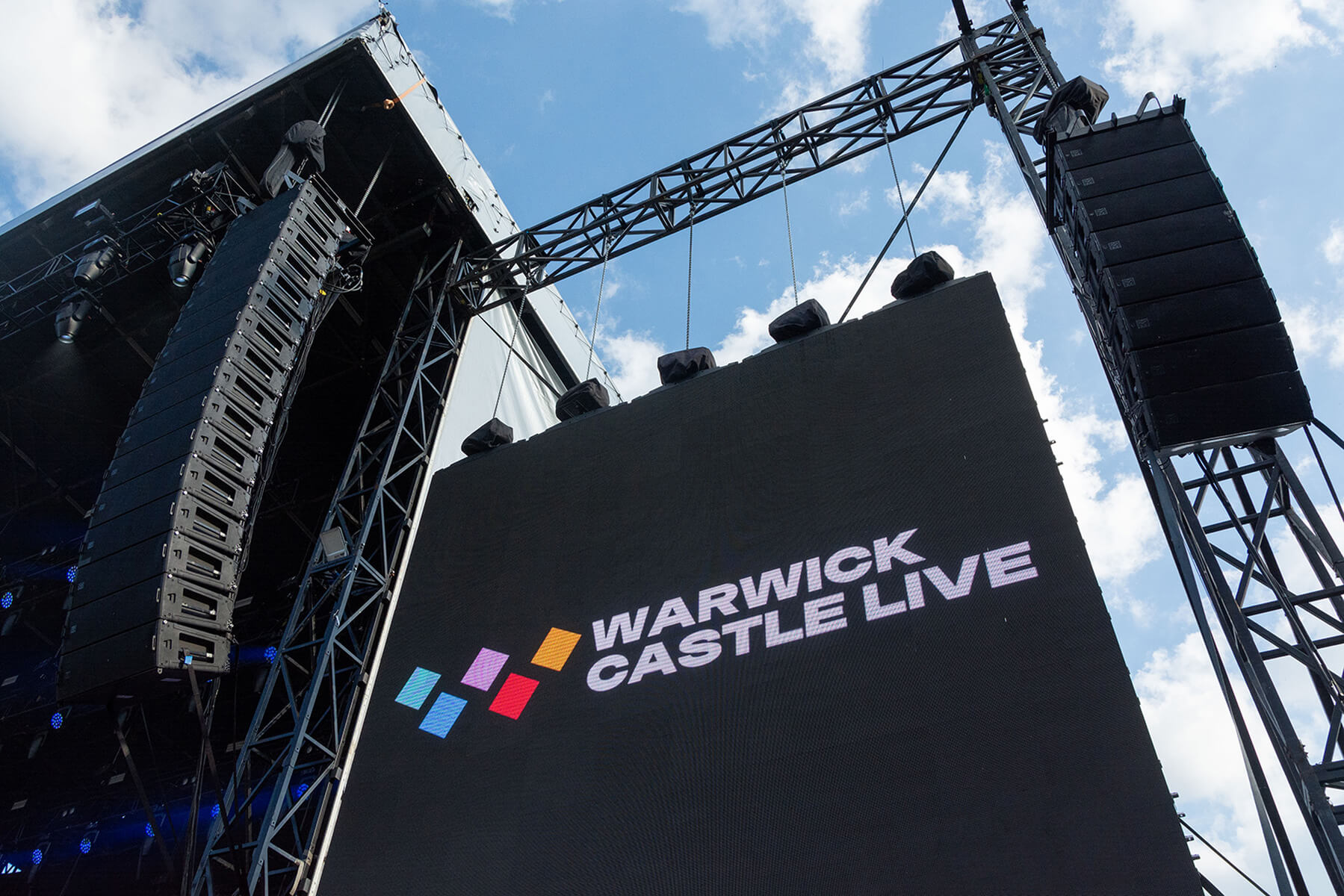
UK: Production company, RG Jones Sound Engineering, needed to pull out all the stops when RG Live and Merlin Entertainment staged a mixed programme of four back-to-back concerts within the beautiful mediaeval setting of Warwick Castle. It was the perfect ‘picnic on the lawn’ scenario, and an occasion which challenged their award-winning Martin Audio MLA loudspeaker array to the maximum.
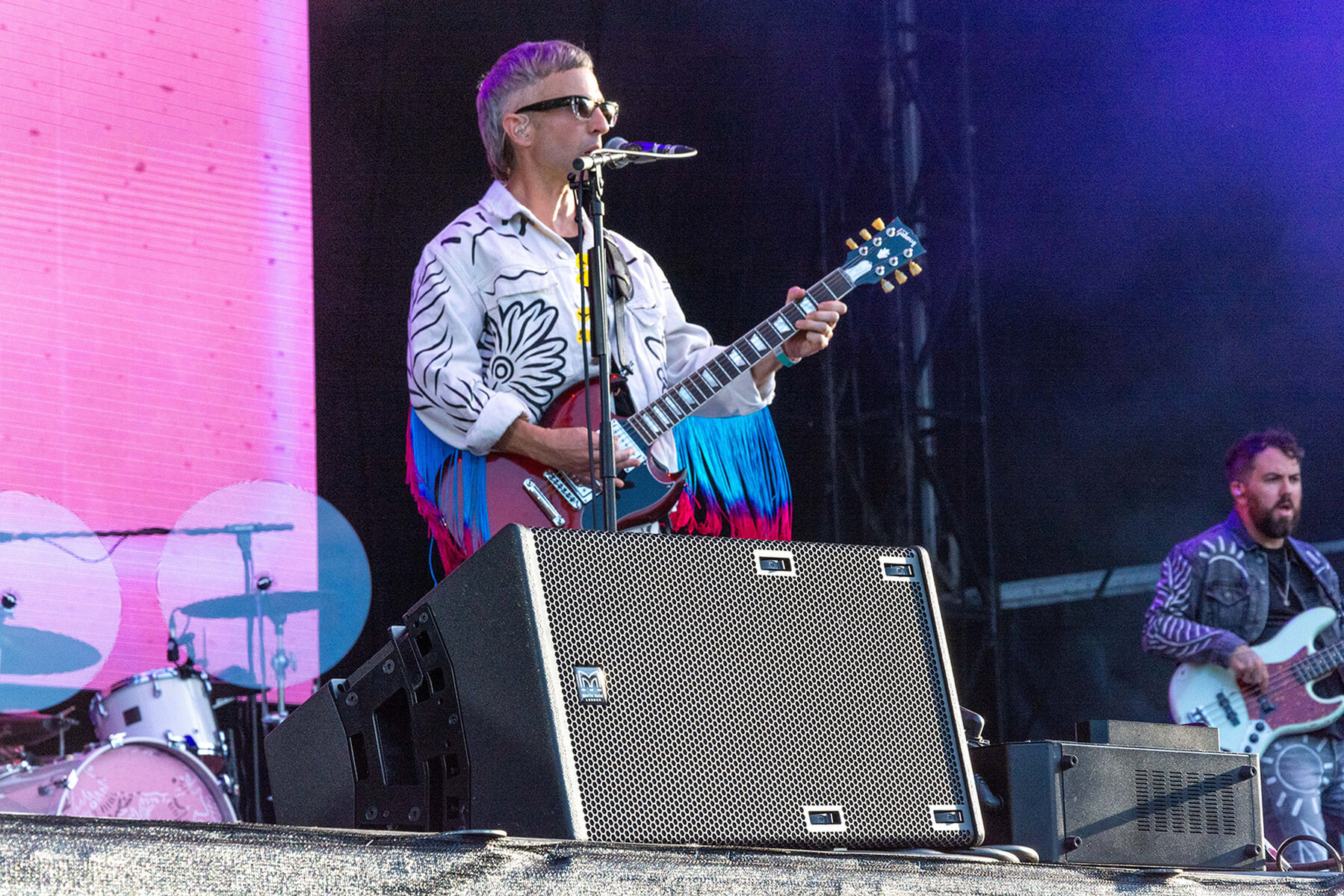
Opening with ‘The Music of Hans Zimmer vs John Williams’—an epic showdown between the legendary film composers—the programme journeyed via Ministry of Sound Classical to McFly, before soaring further into the atmosphere with Noel Gallagher’s High Flying Birds as a finale. As a bonus for the audience, joining Gallagher were legendary Smiths’ guitarist Johnny Marr and The Waeve, featuring Blur’s Graham Coxon and ex-Pipette Rose Elinor Dougall.
All played out through Martin Audio’s flagship PA, which broke new ground when it was launched in 2010, and like a fine wine continues to get better with age. And for this type of event there are no more capable hands than RG Jones’ ‘Mr. Classical Spectacular’ maestro Simon Honywill, who has extensive experiencing of getting every last drop from the PA. He and Anthony Inglis, who conducted the London Concert Orchestra on the opening night concert, were reunited, having first worked together 33 years ago, while the lineage of RG Live can be traced back to Raymond Gubbay, for whom RG Jones (and Honywill in particular) have also enjoyed a working relationship extending over several decades. The same goes for their long association with production manager, Dick Tee.
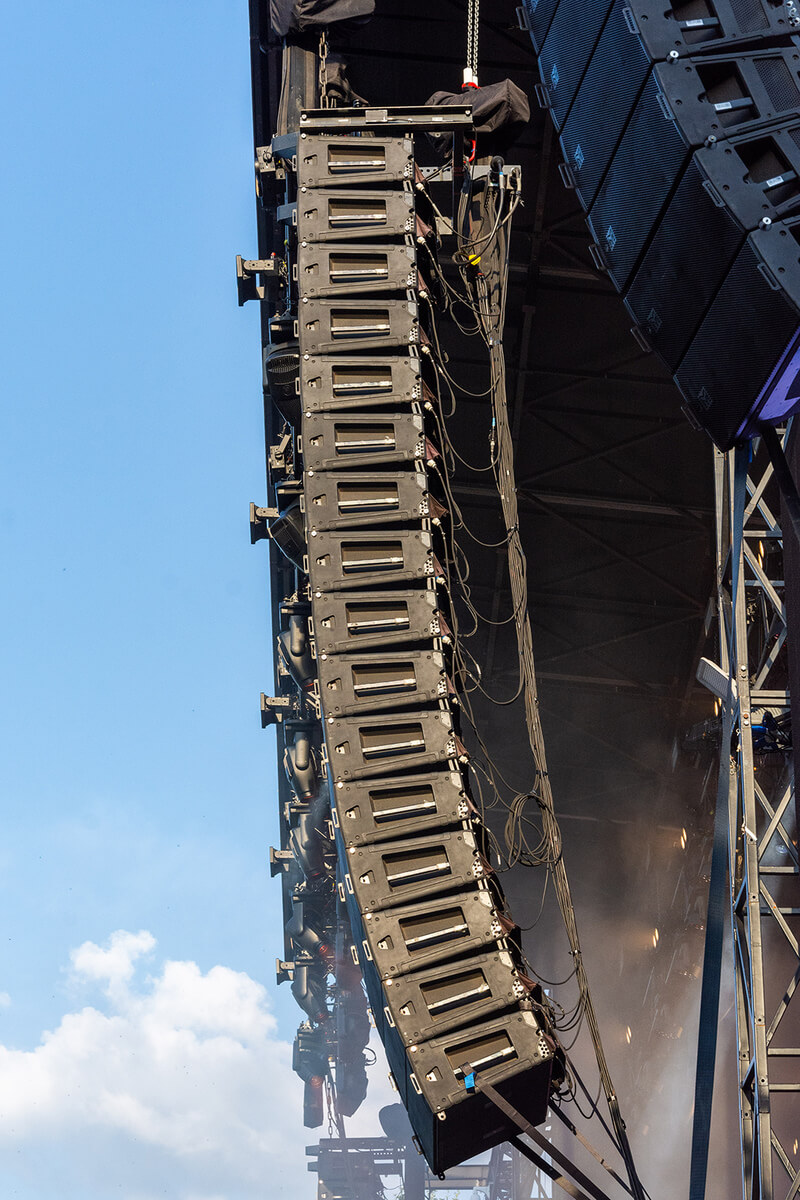
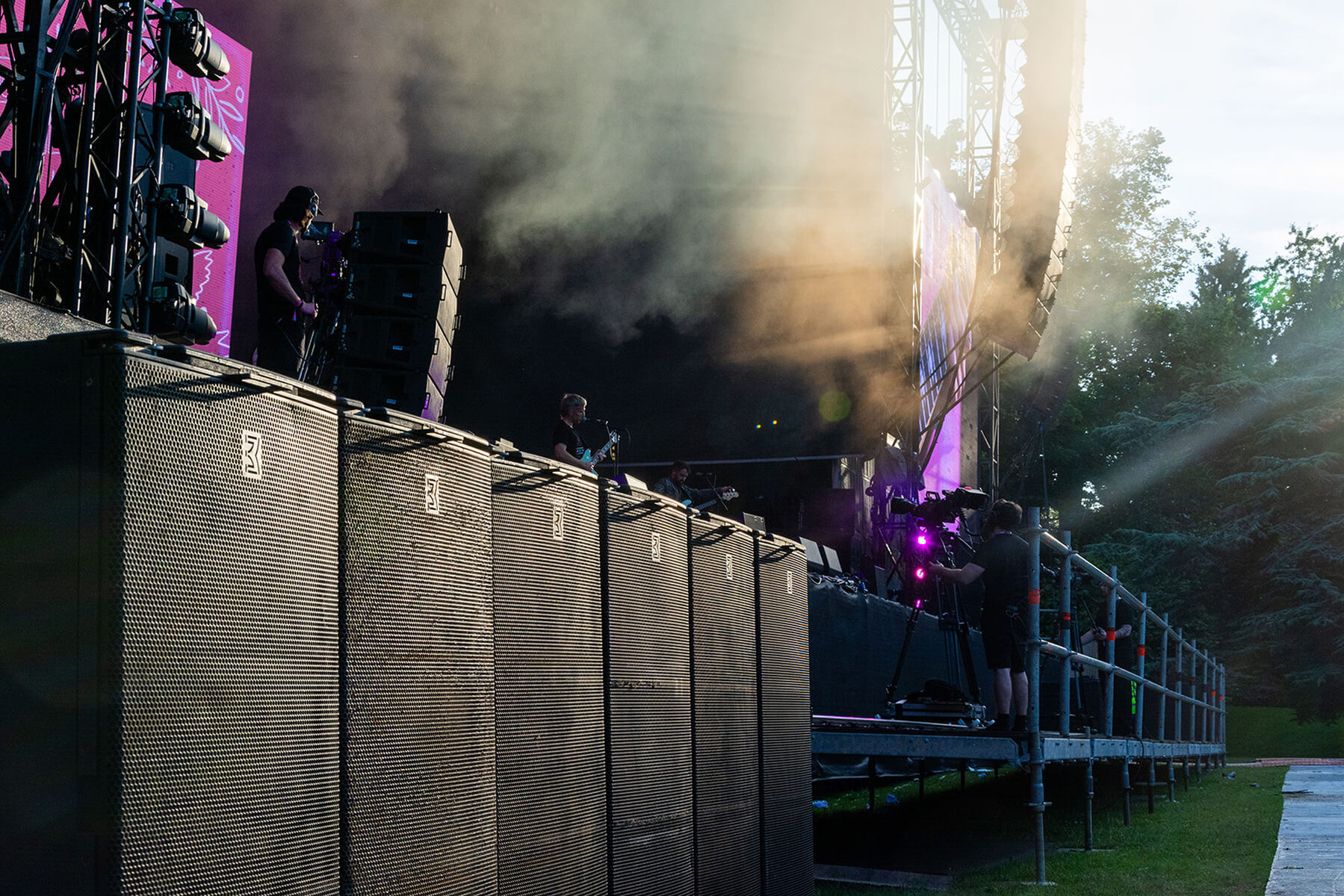
Honywill co-managed the sound system design along with Martin Audio’s product support engineer, Ben Tucker (who doubled asde factosystem tech). The main PA comprised 16 MLA elements on each hang, underpinned with 24 MLX subwoofers, which were reconfigurable. The subs themselves started off in a broadside cardioid array but reverted to a staggered end fire configuration, since Noel Gallagher didn’t want subs placed in front of the stage. “But this also meant it was actually quieter on stage,” noted Honywill.
Everything was spot on.
The site itself was very long and narrow—260 metres from front to back, with a significant rise. To compensate for this and ensure system optimisation, the main hangs were complemented with eight L/R MLA Compact providing outfills, four further MLA Compact enclosures, stacked left and right, for infills, with a pair of TORUS T1230 as lipfills.
Delays were set at around 95-100 metres—slightly staggered and comprising two hangs of 12 Martin Audio WPL. These were boosted by another two hangs of staggered speakers, each comprising eight WPL.
This was the RG Jones’ team’s first visit to Warwick Castle. And although the venue is well accustomed to staging concerts, production levels have rarely been on this scale. RG Jones also had to be mindful that the Castle is situated right in the town centre. Therefore exacting offsite thresholds were set at 75dB(C) at one-minute Leq.
“These levels are generally unheard of, and we worried [the performances] were going to be quiet,” said Honywill. “But in actual fact it was absolutely fine.” This was due to careful tuning of the system and working some magic on the delays. We used the control technology to its full extent, particularly the ‘Hard Avoid’ [function] to make sure the system dropped off properly where it needed to. And that worked really well—in fact everyone was delighted.”
The other challenge facing RG Jones was that with diverse acts coming in each day, scheduling was tight, minimising the time they were actually able to run the system up. They were also needing to work around the Castle’s normal visitor attractions, with school trips and so on … “that whole mediaeval vibe, jousting and falconry, plague burials and witch hanging”, as Honywill puts it.
As with most concerts with a classical bent, the event culminated in a firework finale, which book-ended the spectacular in the time-honoured fashion.
In summary, Simon Honywill described the four-day event as a complete success. “I imagine we will see a lot more concerts featuring a mixed bag of artists in the future.
“Overall it was a great working environment in a really gorgeous setting. Everything was spot on … apart from the plague burials and witch hanging, of course.”